from Braintied
November 2026
Cortex
What we are learning while we build with AI, written for builders, artists and the curious.
from Braintied
November 2026
What we are learning while we build with AI, written for builders, artists and the curious.
Claude Fable 5 was the first model good enough to do real work instead of almost-work. The public had it for three days before the government recalled it. A field report on the moment AI crossed the line, and why staying on the right side of it is about price and permission, not raw intelligence.
A retrieval-augmented feature that costs four-tenths of a cent per query looks free at 10,000 queries a day and costs half a million dollars a year at 4 million. Building scalable SaaS products in 2026 means treating retrieval, agent orchestration, and per-tenant cost attribution as architecture, not as features bolted onto a 2020 stack. Here is the sequence that separates the teams that scale from the ones that compress their own margins.

GDPR fines have passed €5 billion, but the real exposure is architectural: shared vector indexes, multi-agent delegation, and MCP tool servers move personal data through systems no privacy program was built to audit. Here is how to enforce data privacy at request time instead of in a PDF.

GDPR fines have passed €5 billion, and the EU AI Act now gives regulators a second instrument aimed at high-risk systems. The real risk sits in places most privacy programs never mapped: vector indexes, agent handoffs, and MCP tool calls. Here is the architecture that keeps data privacy and compliance enforceable in production.
Enterprise AI in Q4 2026 has consolidated around three ideas: multi-agent orchestration, retrieval quality, and MCP as the standard integration layer. Here is the architecture, the token economics, and the six-week plan teams are using to get past risk review and into production.
The EU's 2026 green claims rules and California's SB 253 turn sustainability from a marketing exercise into an audit problem. Companies treating ESG as a data pipeline, built on RAG, multi-agent orchestration, and MCP connectors, are cutting costs and borrowing cheaper. The rest are about to discover that spreadsheets do not survive assurance.
Remote work did not break workplace culture. It removed the delivery mechanism culture had relied on for a century, and replaced it with a written record that both people and AI agents can query. As multi-agent systems and RAG become standard, the teams that win treat workplace culture as infrastructure instead of a vibe.
Scalable SaaS products are no longer judged by how they handle human traffic. In 2026, autonomous agents generate the load, and most software architecture was never designed for it. Here is how to build metering, isolation, and agent-ready APIs before the volume arrives.
A SaaS product that costs three cents per request looks healthy at ten thousand users and can be fatal at ten million. Here is how software architecture, multi-tenancy, and AI inference economics decide whether your margins survive scale, plus the concrete moves to make before the bill arrives.

GDPR was written for databases, but your data privacy risk now lives in context windows, vector stores, and agent-to-agent calls. Here is why RAG and multi-agent systems break data minimization, and the five controls that make compliance mechanically possible.

Enterprise AI has quietly moved past model selection. Multi-agent architectures, hybrid RAG pipelines, and Model Context Protocol adoption now decide whether AI programs deliver measurable returns or stall in pilot purgatory. Here is what the data from Q4 2026 deployments actually shows, and the five moves that separate compounding systems from expensive experiments.
The return-to-office fight was never about productivity; it was about the cost of coordinating work across people who are not in the same room. As RAG pipelines and Model Context Protocol adoption mature, agents are absorbing the routing work that once justified the office. Here is what remote work culture looks like when context becomes infrastructure.

Google's emissions rose 48% and Microsoft's climbed 29% while both scaled AI infrastructure, proof that sustainable business practices now live in your inference logs rather than your facilities report. This analysis breaks down how RAG, multi-agent routing, and prompt caching turn ESG from a reporting burden into a cost advantage, with the specific metrics and design choices that decide which outcome you get.
Enterprise AI is no longer a model-selection problem. Multi-agent systems, RAG architectures, and the Model Context Protocol have split the stack into five layers, and four of them are yours to build. Here is what that means for your roadmap, your budget, and the metrics that actually matter.

Sustainability in the AI era is no longer a reporting exercise; it is an architecture decision. As inference drives up to 80% of a model's lifetime energy use, the companies hitting their ESG targets are the ones right-sizing models, leaning on retrieval instead of retraining, and standardizing their tool integrations. Here is where the ROI actually lands.

Remote work stopped being a debate about desks the moment agentic AI started executing the work itself. With MCP standardizing how agents reach enterprise tools and RAG turning institutional context into queryable infrastructure, workplace culture is now a design problem rather than a location. Here is what the data says about productivity, governance, and the management layer nobody retrained.

GDPR fines have topped €5 billion, yet the violations that matter now happen inside AI systems no regulator anticipated. This analysis breaks down why multi-agent architectures, RAG retrieval, and MCP tool calls turn data privacy from a boundary you defend into a data flow you must govern at every hop. Here is what engineering teams should build before their next agent ships.

Amazon's return-to-office mandate triggered an internal revolt, but the real remote work story is happening elsewhere. Multi-agent AI, RAG architectures, and the Model Context Protocol are quietly rebuilding the coordination layer that distributed teams never had, and with it, workplace culture itself.
GDPR fines have passed €5 billion, yet most enterprises still cannot map where personal data flows inside their own AI stack. As RAG pipelines and multi-agent systems become standard, data privacy has shifted from a legal exercise into an architecture property. Here is where your compliance program breaks, and the five engineering controls that hold it together.

Sustainability is no longer a communications exercise. As AI data centers push corporate emissions upward and CSRD, CBAM, and California's SB 253 tighten the rules, ESG performance now depends on the same data architecture as enterprise AI: retrieval, multi-agent coordination, and standardized tool access. Here is where the ROI actually shows up.
Scalability stopped being an engineering problem the moment AI became the product. This analysis breaks down the software architecture decisions that determine whether your SaaS compounds or collapses under growth, from separating inference and application planes to treating retrieval as first-class infrastructure.
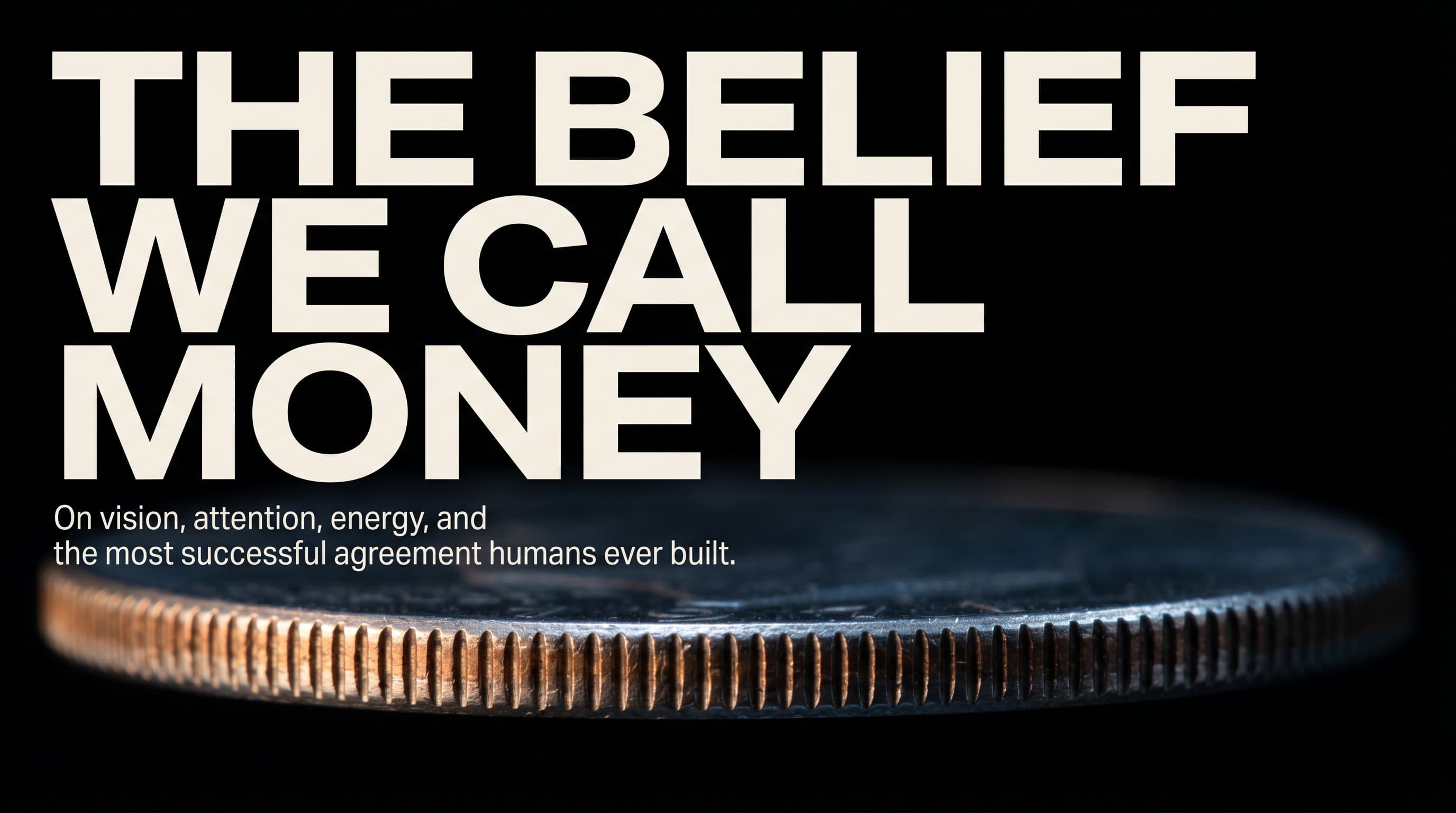
How energy, attention, and vision all slipped their anchors in our lifetime, and why the bill is now coming due.
The infrastructure decisions you make in the next 90 days will determine your SaaS product's scalability ceiling, cost structure, and competitive viability for 18-24 months. Multi-agent AI systems, RAG architectures, and strategic cost optimization aren't optional features in 2026 -they're the architectural foundations that separate margin-accretive businesses from resource-constrained ones.

Enterprise AI is shifting from single-model systems to sophisticated multi-agent architectures. In Q1 2026, the architectural patterns and integration standards defining the next era of AI are crystallizing -and organizations still operating on legacy approaches are falling behind.

You don't need a PhD to ship AI features. Here's a practical, step-by-step guide for developers ready to add intelligence to their products.

AI isn't replacing artists - but understanding how it sees the world will make your creative practice sharper, more informed, and more resilient.

You don't need to be a tech person to use AI - you already are. Here are 10 ways artificial intelligence quietly shapes your everyday life.
Neural networks aren't magic - they're chains of simple math that learn patterns from data. Here's how they actually work, explained without equations.

Not every industry is moving at the same speed with AI. Here's a realistic framework for understanding where yours stands - and what to do about it.

AI isn't writing songs that matter - musicians are. Here's how artists are using AI tools as creative collaborators rather than replacements.

AI jargon can feel like a foreign language. Here's a plain-English guide to the terms, concepts, and questions that will help you navigate the conversation with confidence.

While chatbots get the headlines, AI is quietly revolutionizing scientific discovery - from protein folding to drug design to climate modeling. Here's what's actually happening.

Solo developers are shipping AI-powered products faster than ever. Here's what the best indie makers are doing differently - and how the economics make it possible.

The AI debate is stuck between utopia and apocalypse. The reality is more nuanced - and more actionable - than either extreme. Here's the case for optimism with clear eyes.
Braintied names, designs, builds and launches companies with founders, and runs its own products on the same engine. Cortex is where we write down what that work teaches us, while it is still fresh.
The products we run
Kulti, Sentigen, Parlor, Swishh and the rest, on one shared stack.
Advising and consulting
We audit how your business runs, write the playbooks and build the agents.
For investors
How the studio, the stage and the portfolio fund each other.
The thesis
Why one foundation under many companies beats a stack per company.