The biggest AI breakthroughs aren't happening in Silicon Valley
While the tech world debates chatbots and image generators, something more profound is happening in research labs: AI is accelerating scientific discovery in ways that could reshape medicine, materials science, and our understanding of biology.
AlphaFold changed everything
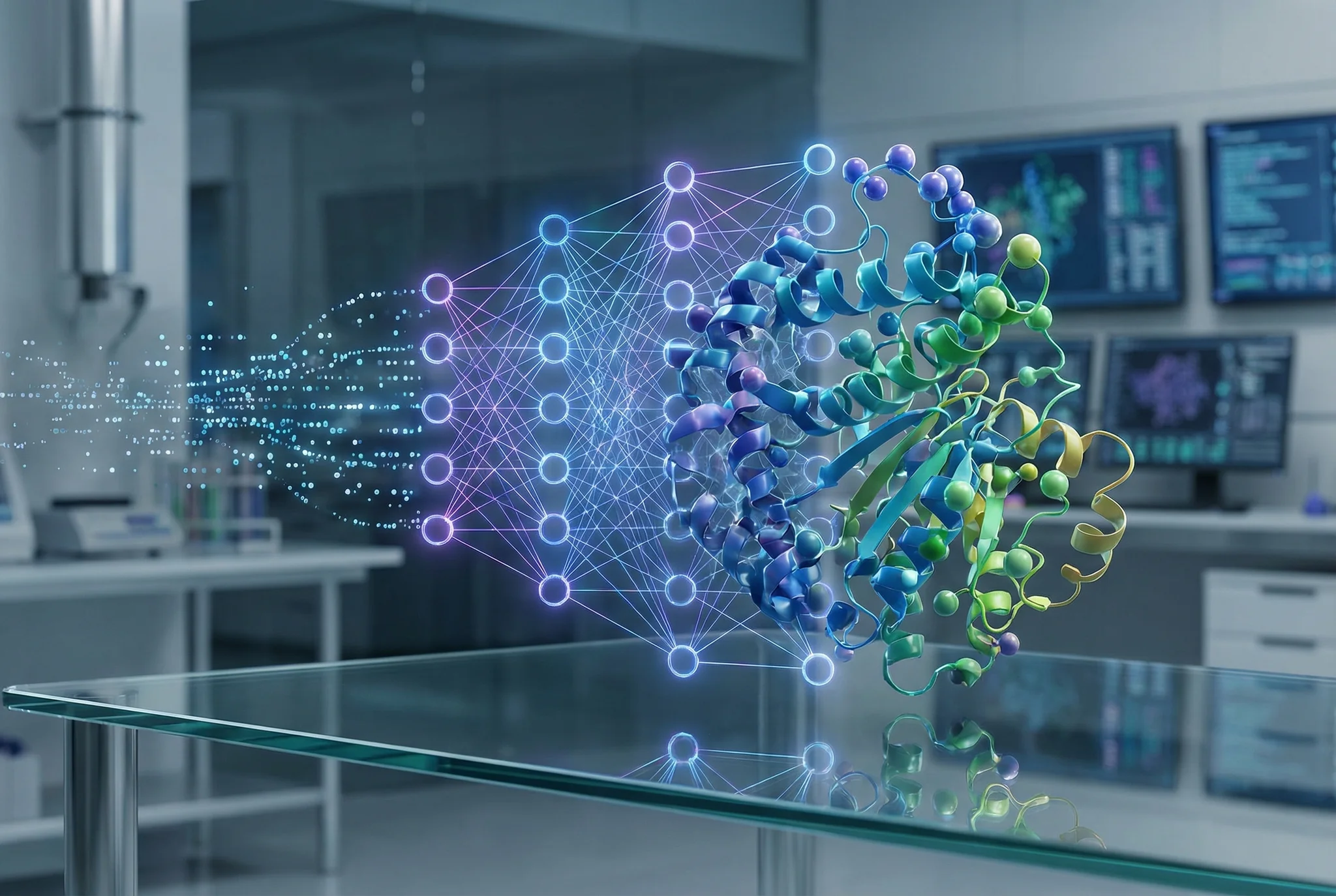
In 2020, DeepMind's AlphaFold solved a 50-year-old grand challenge in biology: predicting the 3D structure of proteins from their amino acid sequences. This wasn't incremental progress. It was a quantum leap.
Why it matters: protein structures determine how diseases work, how drugs interact with the body, and how biological systems function. Before AlphaFold, determining a single protein structure could take years of laboratory work. Now it takes seconds.
The AlphaFold Protein Structure Database has predicted structures for over 200 million proteins - essentially the entire known protein universe. Researchers worldwide are using it to accelerate drug discovery, understand diseases, and engineer new materials.
Materials science is next
The same approach - using AI to predict the properties of complex structures - is being applied to materials science. Google DeepMind's GNoME project identified 2.2 million new crystal structures, including 380,000 stable materials that could be used in batteries, solar cells, and computer chips.
Before AI, discovering a new material was a painstaking process of trial and error. Now researchers can computationally screen millions of candidates and focus lab time on the most promising ones.
Drug discovery, accelerated
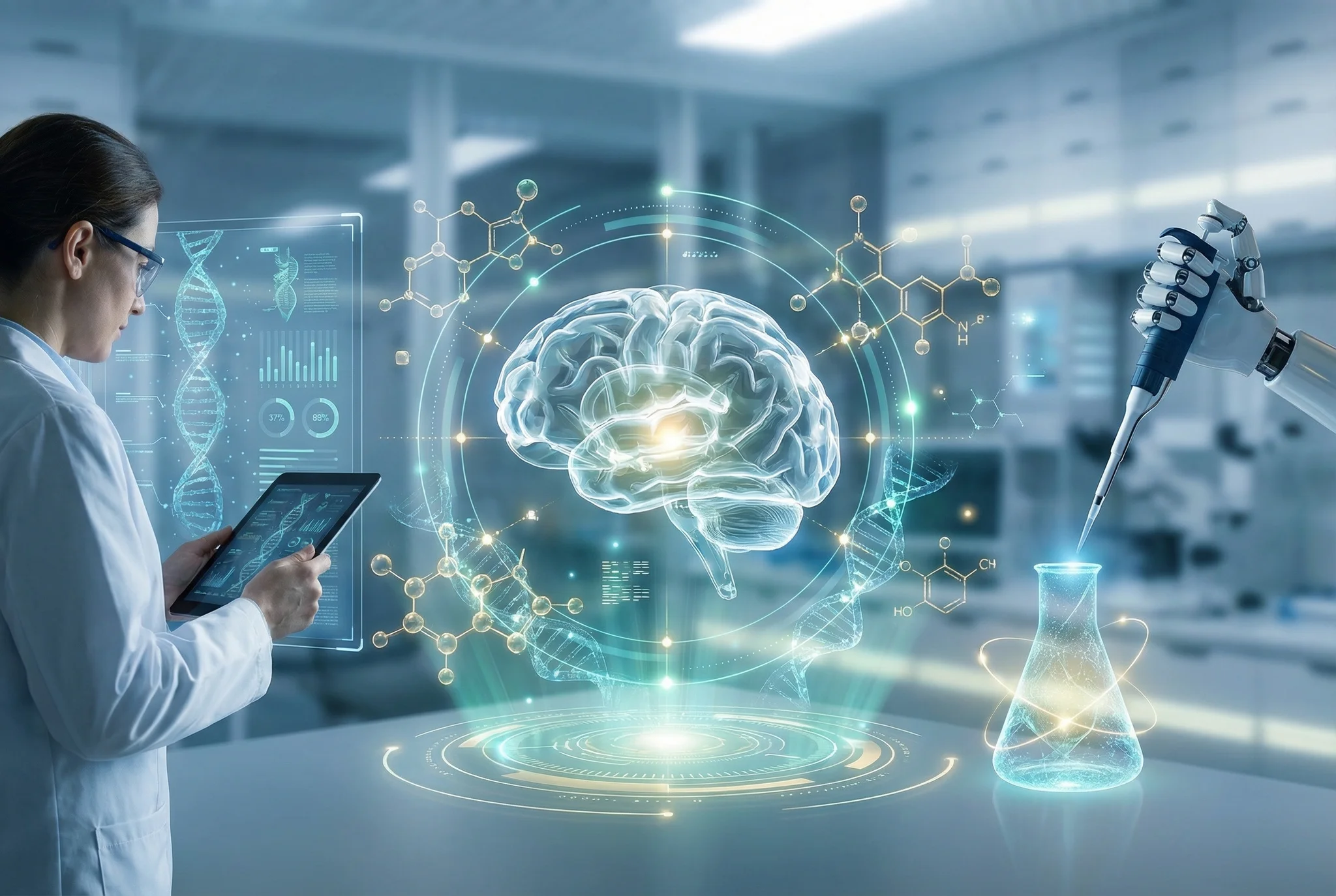
Pharmaceutical companies are using AI to:
- Identify drug targets faster by analyzing genetic and protein data.
- Design new molecules that are more likely to work as treatments.
- Predict side effects before expensive clinical trials.
- Repurpose existing drugs for new conditions by finding hidden patterns in medical data.
The timeline from target identification to clinical candidate has shrunk from years to months in some cases. This doesn't mean faster drugs to market - clinical trials still take time - but it means more and better candidates entering the pipeline.
Climate and energy
AI is being used to optimize fusion reactor designs, improve weather forecasting (Google's GraphCast outperforms traditional methods), design more efficient solar cells, and model climate scenarios with greater accuracy.
These aren't moonshot projects. They're producing real results that are being integrated into active research programs.
Why you should care
Even if you're not a scientist, AI-powered discovery affects you:
- Faster drug development means treatments for diseases that currently have none.
- New materials mean better batteries, cheaper solar panels, and more sustainable manufacturing.
- Better climate models mean more accurate predictions and better-informed policy decisions.
The AI revolution in science is quieter than the AI revolution in consumer tech. But its impact could be far more significant.
The human element remains
AI doesn't replace scientists. It gives them superpowers. The researchers using these tools still need deep domain expertise to ask the right questions, design the right experiments, and interpret the results. AI handles the computational heavy lifting, freeing humans to do what they do best: think, hypothesize, and discover.
That partnership - human curiosity amplified by machine capability - is the most exciting development in science in a generation.
Share this article