No math required. Just curiosity.
Neural networks power everything from voice assistants to self-driving cars, but most explanations either drown you in equations or oversimplify to the point of uselessness. Let's find the middle ground.
Think of it as a chain of opinions
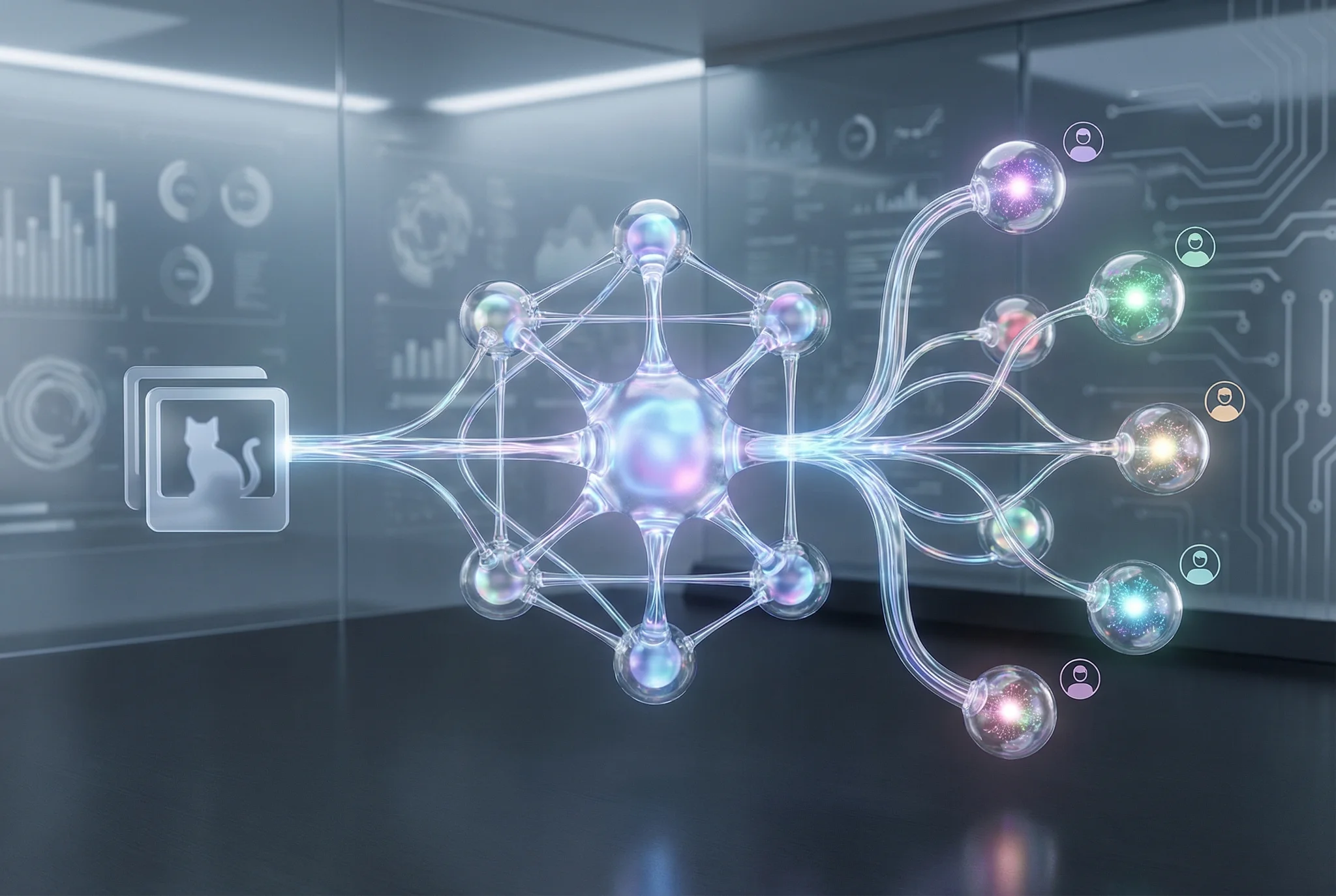
Imagine you're trying to decide if a photo contains a cat. You could ask one friend, but their judgment might be off. So instead, you ask a hundred friends, each of whom looks at a different aspect of the image - edges, colors, textures, shapes.
Each friend gives a confidence score: "I'm 80% sure this edge pattern looks cat-like." These scores get passed to another group of friends who combine them: "Given the edges AND the texture, I'm 90% sure it's a cat."
That's essentially what a neural network does. Each "neuron" is a simple function that takes in numbers, weighs them, and passes a result forward. Individually, each neuron is almost trivially simple. Together, they can recognize faces, translate languages, and generate art.
Layers: from pixels to meaning
A neural network is organized in layers:
- Input layer: Raw data goes in. For an image, this is pixel values.
- Hidden layers: These are where the magic happens. Early layers detect simple patterns (edges, gradients). Deeper layers combine those into complex concepts (eyes, ears, whiskers).
- Output layer: The final verdict. "Cat: 97%. Dog: 2%. Toaster: 1%."
The depth of a network - how many hidden layers it has - is what makes it "deep" learning. More layers allow more abstract representations.
How it learns: trial, error, and adjustment
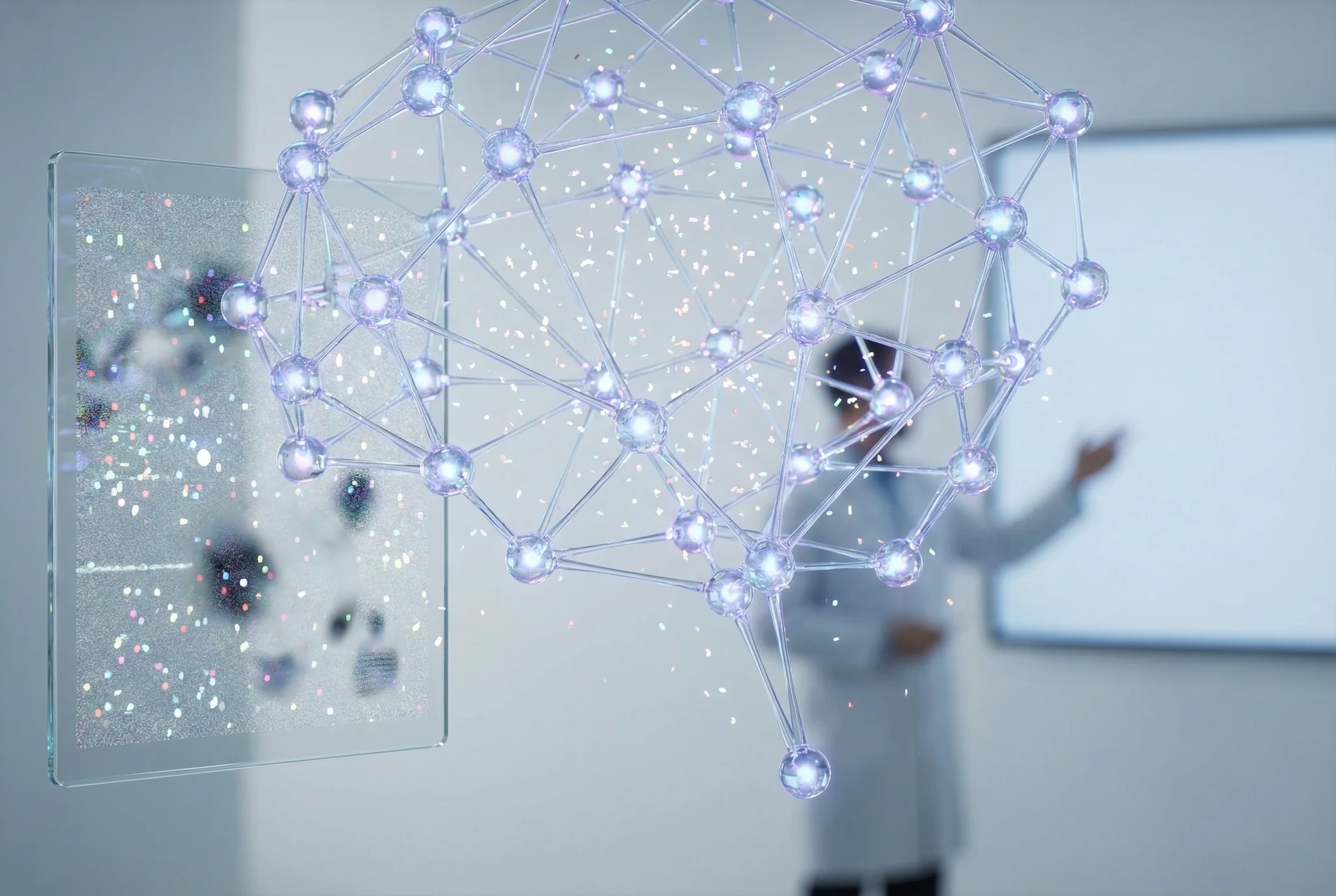
Before training, a neural network is essentially random. Its "opinions" are noise. Training works like this:
- Show it an example (a photo labeled "cat").
- It makes a prediction (probably wrong at first).
- Measure how wrong it was (this is the "loss function").
- Adjust the weights slightly to be less wrong next time (this is "backpropagation").
- Repeat millions of times.
Over time, the network's weights converge on patterns that actually work. It's not programmed with rules like "cats have pointy ears." It discovers those patterns on its own.
Why this matters beyond tech
Understanding neural networks isn't just for engineers. These systems are making decisions about loan approvals, medical diagnoses, criminal sentencing, and hiring. Knowing that they learn from data - and that biased data produces biased networks - is important for everyone.
The next time someone tells you AI "understands" something, remember: it's a very sophisticated pattern-matching chain. Powerful, useful, and impressive - but not conscious. Not yet, anyway.
Further reading
- 3Blue1Brown's neural network videos - the best visual explanation on the internet.
- "But what is a neural network?" - a question worth revisiting every time the technology leaps forward.
Share this article