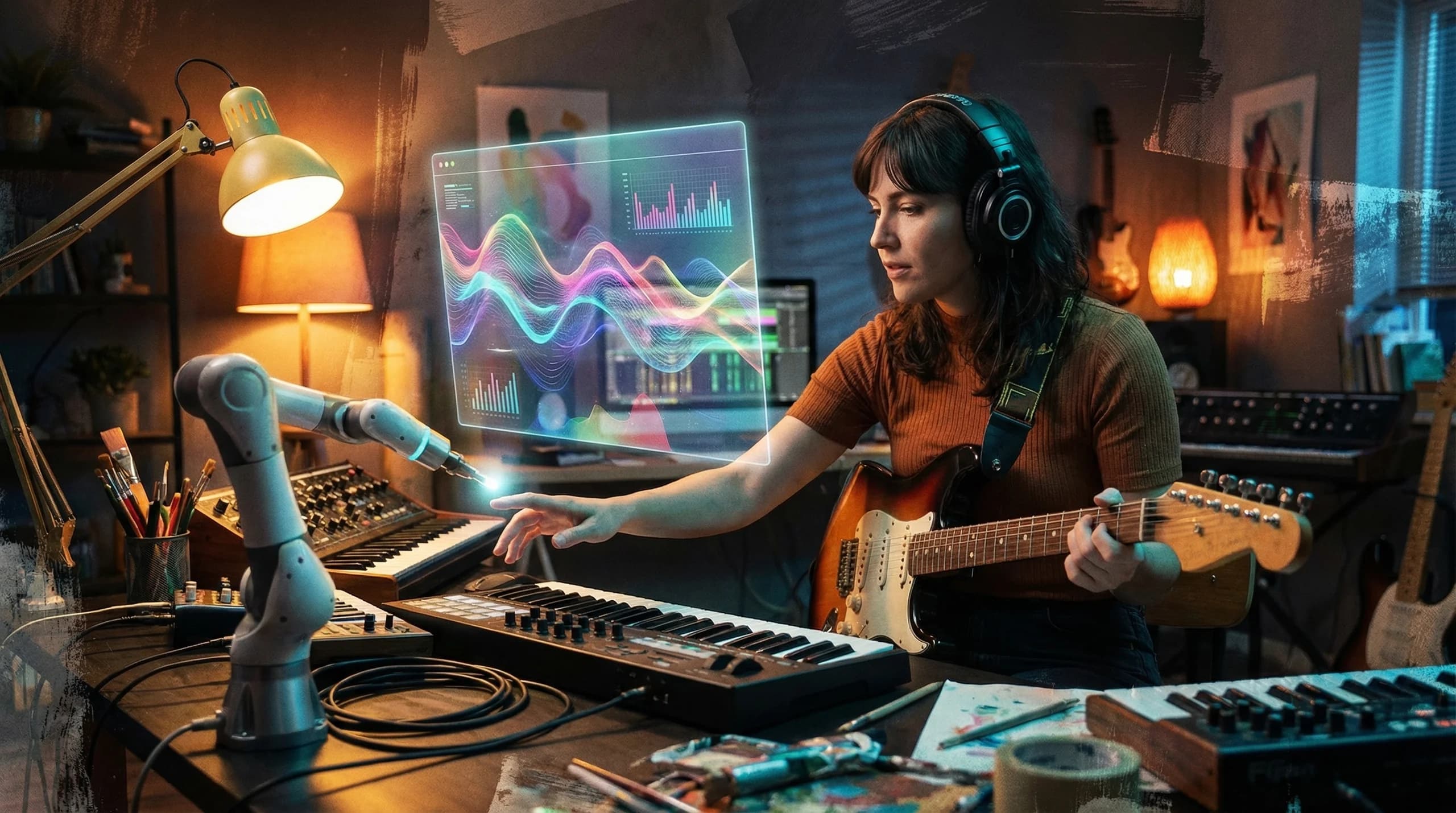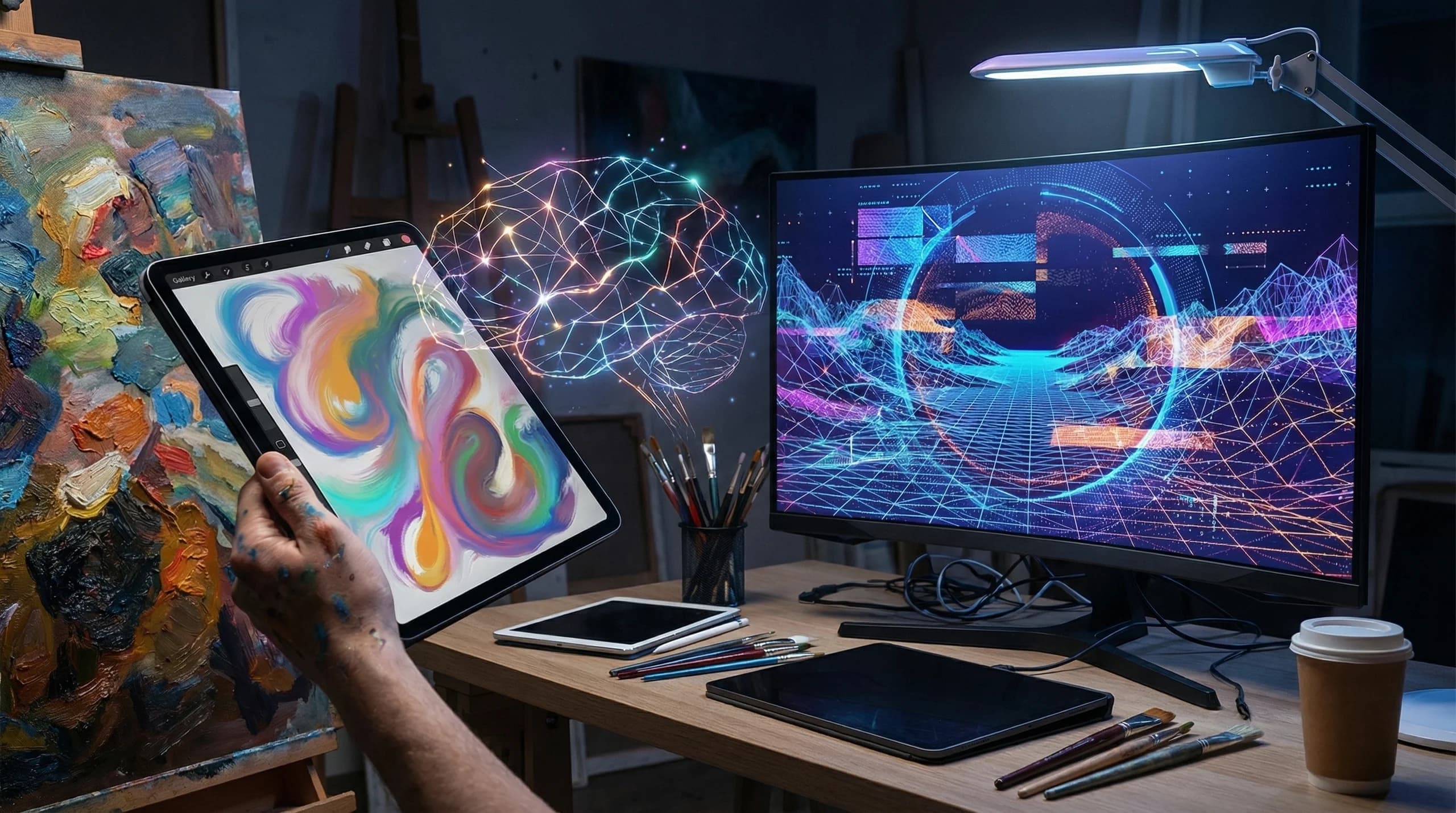
The canvas is changing - and that's a good thing
For centuries, every new tool that entered the artist's studio was met with suspicion. Oil paint was once scandalous. Photography was going to "kill painting." Digital art wasn't "real art." Now artificial intelligence is having its turn in the spotlight, and the conversation sounds eerily familiar.
But here's what most of that conversation misses: understanding how AI interprets visual information doesn't make you less of an artist. It makes you a more informed one.
How machines parse beauty
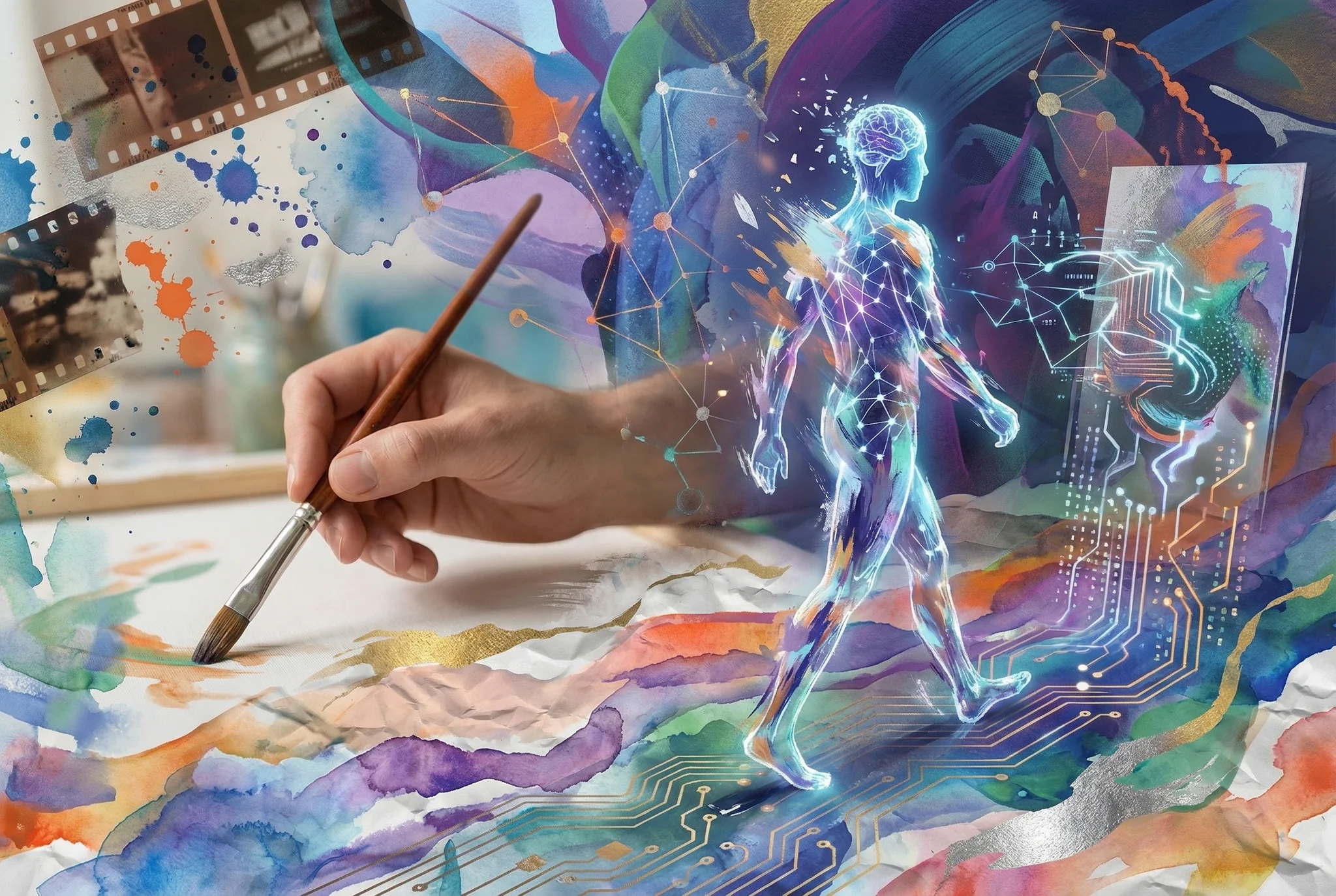
When a diffusion model generates an image, it isn't "creating" in the way humans do. It's navigating a learned landscape of visual relationships - textures mapped to concepts, compositions weighted by millions of training examples. Think of it less as a rival painter and more as an impossibly vast mood board that can remix itself on command.
The interesting part isn't the output. It's the latent space - the mathematical territory between images where concepts blend and morph. Artists who explore this space aren't replacing their craft. They're discovering a new medium.
What this means for your practice
- Reference, not replacement. Use AI-generated imagery as a starting point the way you'd use a photograph or a sketch. It's raw material.
- Understand the bias. AI models reflect their training data. Knowing this helps you push against homogeneity deliberately.
- Hybrid workflows are legitimate. Combining hand-drawn elements with AI-assisted backgrounds, textures, or color palettes is no different than using Photoshop filters - it's a tool in service of your vision.
- Conceptual art gets a new engine. If your work is idea-driven, AI can prototype concepts faster than any previous tool, letting you iterate on meaning rather than mechanics.
The artists who thrive will be the ones who stay curious
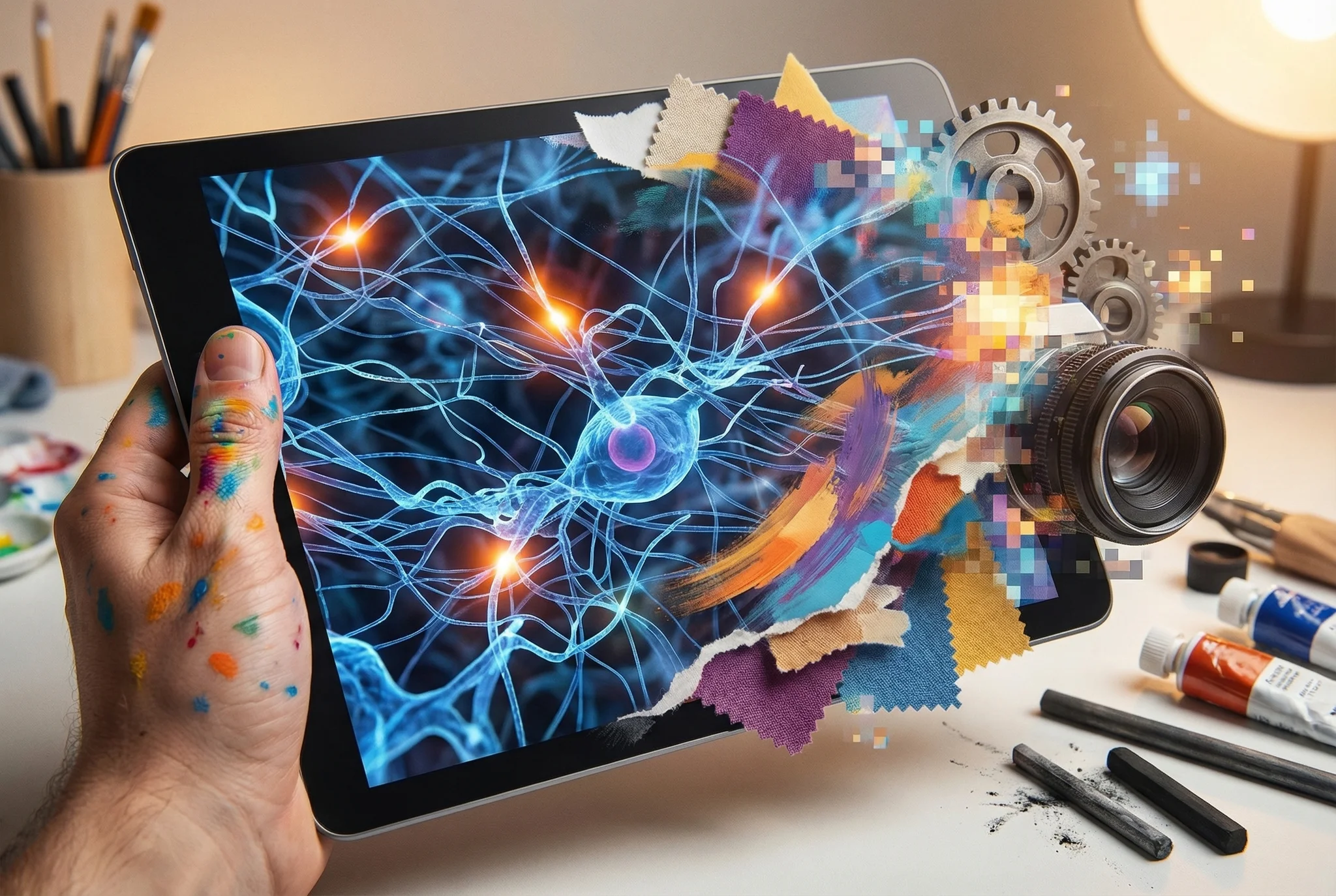
The photographers who thrived after digital cameras arrived weren't the ones who ignored the technology. They were the ones who learned what the sensor could do - and then bent it to their will.
The same principle applies now. You don't need to become a machine learning engineer. But understanding the basics of how these systems see, compose, and interpolate will give you creative leverage that pure technophobes won't have.
"The artist is not a special kind of person. Every person is a special kind of artist." - Ananda Coomaraswamy
That sentiment has never been more relevant. The barrier to visual expression just dropped to nearly zero. What matters now isn't access to tools - it's the quality of your ideas, your taste, and your willingness to experiment.
Start here
- Play with a free image generator. Don't try to make "good art." Try to understand its patterns.
- Feed it your own sketches as input. See how it interprets your visual language.
- Read about CLIP and how text-to-image models map words to visual concepts.
- Talk to other artists doing hybrid work. The community is larger and more thoughtful than the discourse suggests.
The canvas is changing. The artist isn't going anywhere.
Share this article