The studio has a new instrument - and it's weird
When AI music tools first appeared, the reaction from the music community was predictable: fear, dismissal, outrage. And fair enough - the idea of a machine writing songs feels deeply personal in a way that AI-generated spreadsheet summaries do not.
But something interesting happened when musicians actually started using these tools: they didn't replace the creative process. They changed it. And for many artists, the change has been genuinely exciting.
What AI music tools actually do
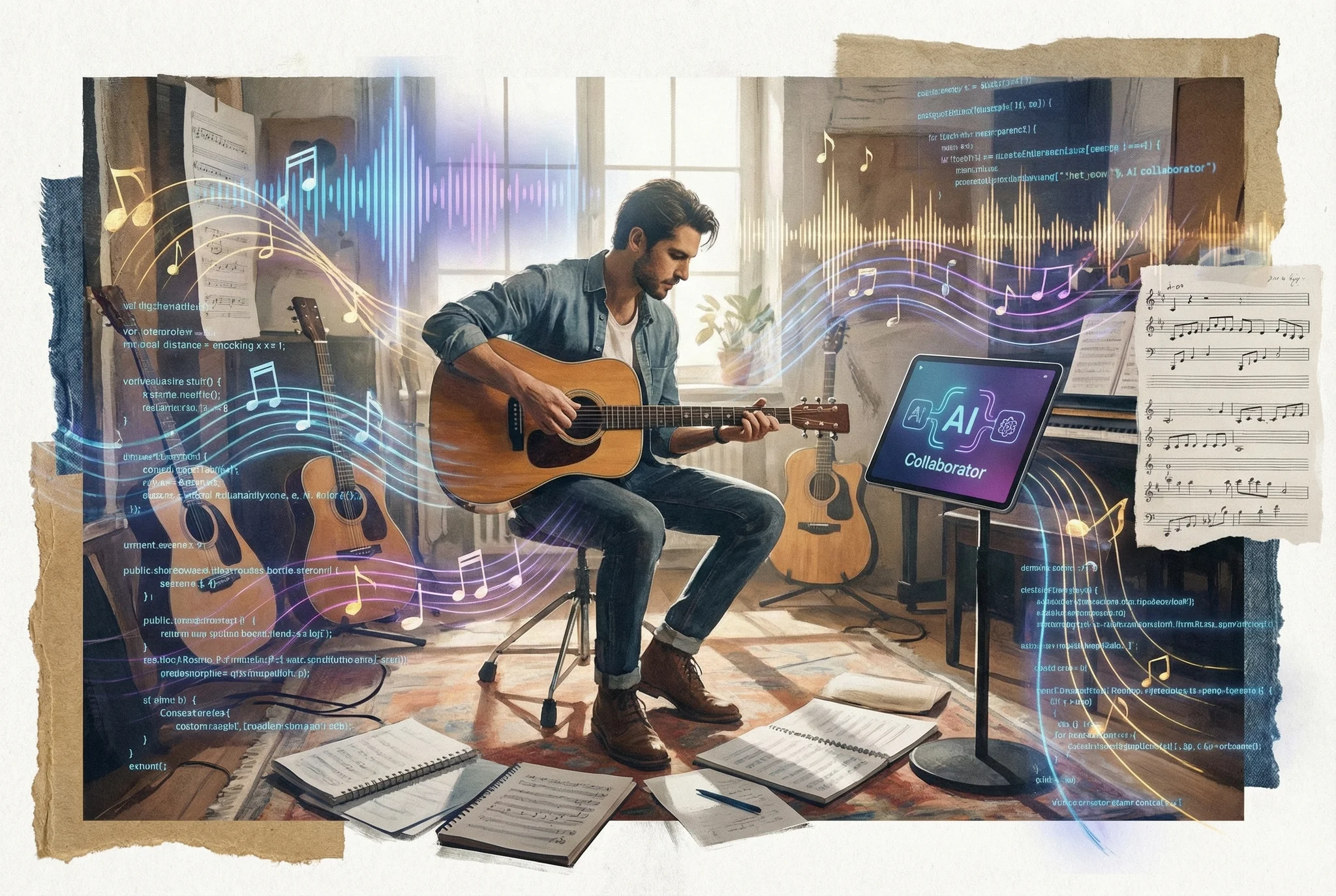
Let's be specific. The current generation of AI music tools can:
- Generate chord progressions and melodies from text prompts or hummed ideas.
- Separate stems from existing recordings (isolate vocals, drums, bass, etc.).
- Suggest arrangements based on genre conventions.
- Create backing tracks for practice, demo-ing, or live performance.
- Master and mix audio with one-click processing.
What they cannot do: write a song that means something. That's still on you.
Three ways musicians are actually using AI
1. Breaking through creative blocks
The most common use case isn't generating finished music - it's generating starting points. A producer stuck on a bridge can ask an AI to suggest five variations. A songwriter can feed in a melody and get harmonic alternatives they wouldn't have thought of.
It's like having a collaborator who never gets tired, never judges your ideas, and has listened to every genre ever recorded.
2. Production democratization
AI mastering tools like LANDR and AI-assisted mixing in DAWs have made it possible for bedroom producers to achieve near-professional sound quality without expensive studio time. This is genuinely leveling the playing field.
3. Live performance augmentation
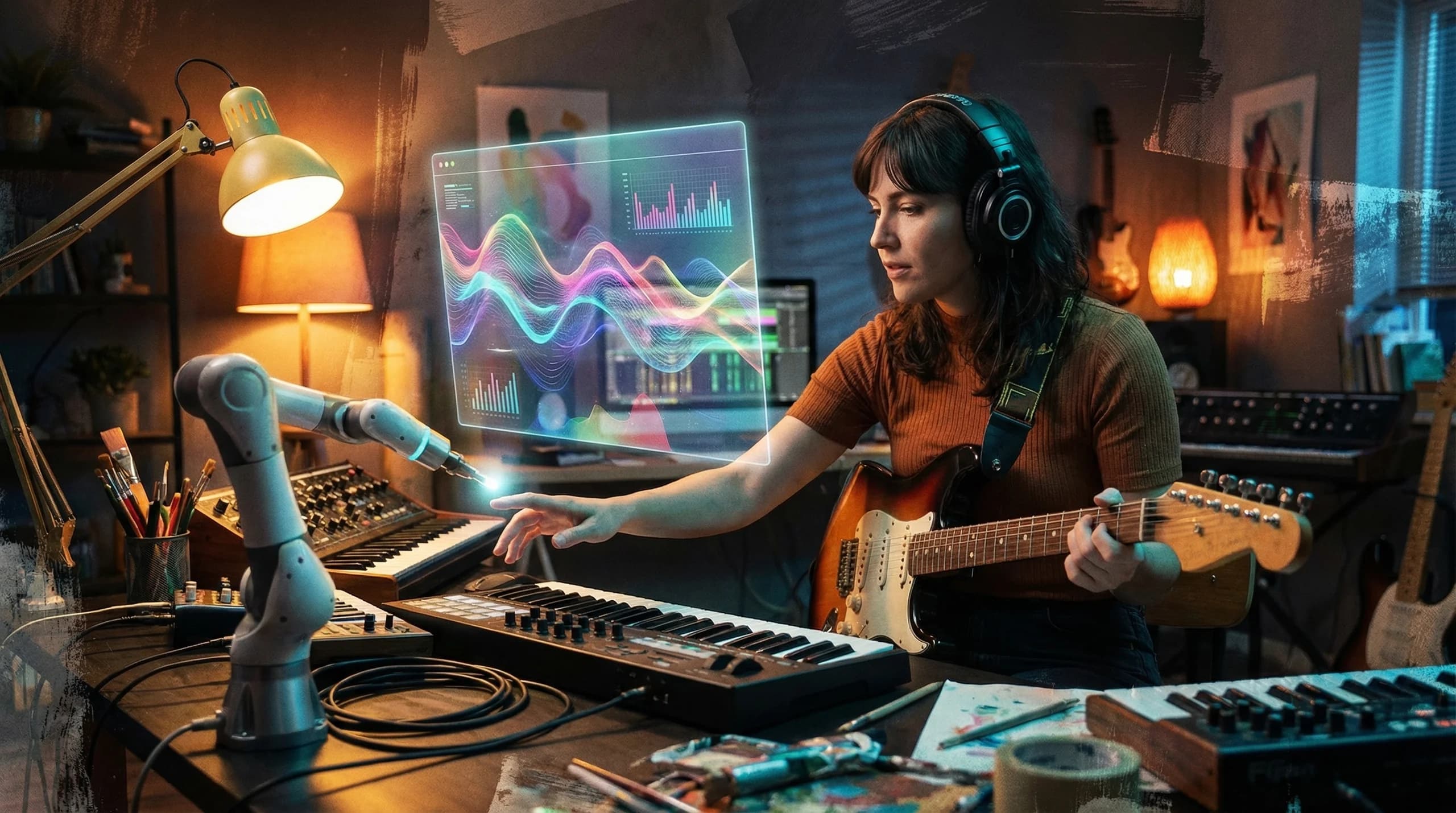
Some experimental artists are using AI in real-time during performances - feeding live audio into models that respond with harmonies, textures, or rhythmic variations. It's creating a new form of human-machine improvisation.
The authenticity question
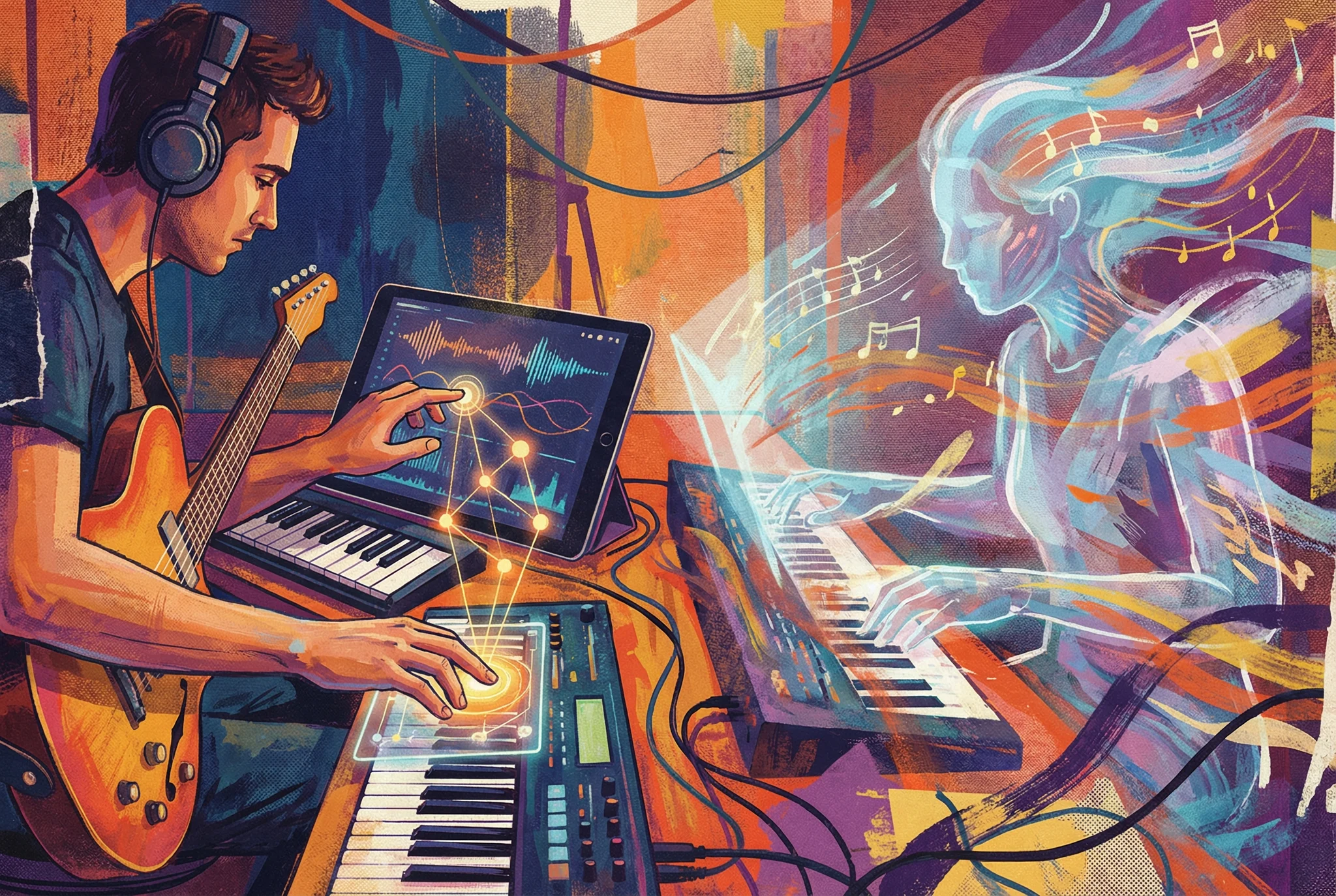
Here's where it gets philosophical. If you use AI to generate a chord progression, modify it, write lyrics over it, arrange it, perform it, and pour your emotion into the recording - is it yours?
Most working musicians would say yes. The tool doesn't make the art. The intention does.
We don't ask painters if they "really" made the painting because they used manufactured paint. We don't question photographers for using autofocus. The medium evolves. The expression remains human.
Where to draw the line
Every artist will draw their own, and that's fine. Some will never touch AI tools. Some will use them in every session. Most will land somewhere in the middle - using AI for the tedious parts (stem separation, rough demos, reference tracks) and keeping the creative decisions for themselves.
The important thing isn't whether you use AI. It's that you understand what it's doing so you can make an informed choice.
Try it yourself
- Suno or Udio - text-to-music generators. Imperfect but fascinating.
- Descript - AI-powered audio/video editing.
- iZotope - AI-assisted mixing and mastering.
- Splash - AI music creation for non-musicians.
The studio has a new instrument. Whether you pick it up is entirely your call.
Share this article