Amazon's five-day return-to-office mandate took effect in January 2025, and the backlash was immediate. Internal polling reported by Bloomberg found roughly 73% of surveyed employees said they were considering looking for another job. More than a year later, the standoff has cooled into an uneasy truce, but the question underneath it never went away: what does workplace culture actually require?
The answer that emerged across 2025 and 2026 is stranger than either side predicted. It is not the office. It is not the ping-pong table. It is coordination, and the technology that makes coordination possible is now changing faster than any culture can absorb.
The Productivity Debate Was Always About Trust, Not Output
Microsoft's Work Trend Index found that 85% of leaders said the shift to hybrid work made it hard to feel confident their employees were productive. That number was never really about output. It was about instrumentation. Leaders had spent decades measuring presence because presence was the only signal they had.
Stanford economist Nicholas Bloom's research on distributed teams tells a different story. Fully remote work showed modest productivity dips in some roles, hybrid arrangements held steady or improved, and retention improved meaningfully. The gap between perception and measurement is the whole story of the last five years. Managers were not lying about their concerns; they were reading a broken dashboard.
That dashboard has since been rebuilt. Task-level telemetry, async written records, and AI-assisted project tracking make output visible in ways a badge swipe never could. The productivity argument is largely over. What remains is the harder problem: distributed teams lose the ambient context that offices provided for free.
Digital Transformation Outran Workplace Culture
Slack arrived in 2013. Zoom went mainstream in 2020. Notion, Linear, and Figma followed. The tools of digital transformation shipped far faster than any organization could write norms for using them. The result is a decade of accidental culture: notification-driven workdays, meetings that exist because nobody wrote a document, and a quiet expectation that everyone is reachable at all hours.
Microsoft called this the "infinite workday." Meetings after 6pm grew 16% year over year, and 68% of employees said they lacked enough uninterrupted focus time. Remote work did not create those problems. It removed the office's physical off-ramp, which had been hiding them.
The fix is not more software. It is deliberate norms: response-time expectations, meeting budgets, and documentation standards. Culture, in a distributed company, is the written record of decisions plus the defaults everyone follows without being asked.
The Coordination Tax Distributed Teams Still Pay
Every remote team pays a coordination tax. A production incident fires at 2am in one timezone. The engineer who handles it posts a summary. Six hours later, a colleague in another region reopens the same thread because the resolution lives in three places and none of them is authoritative. Multiply that by every handoff, every hiring decision, every roadmap pivot.
Gallup's engagement research has consistently found that clarity of expectations is one of the strongest predictors of whether employees stay. Distributed teams struggle with clarity precisely because context decays faster across time zones. Ask anyone who has onboarded remotely: the first month is less about learning the job and more about learning who knows what.
This is the problem AI agents are genuinely good at solving, and it is why the 2026 wave of multi-agent systems matters more to remote work than any collaboration app of the last decade.
Multi-Agent AI Is Becoming the Async Teammate
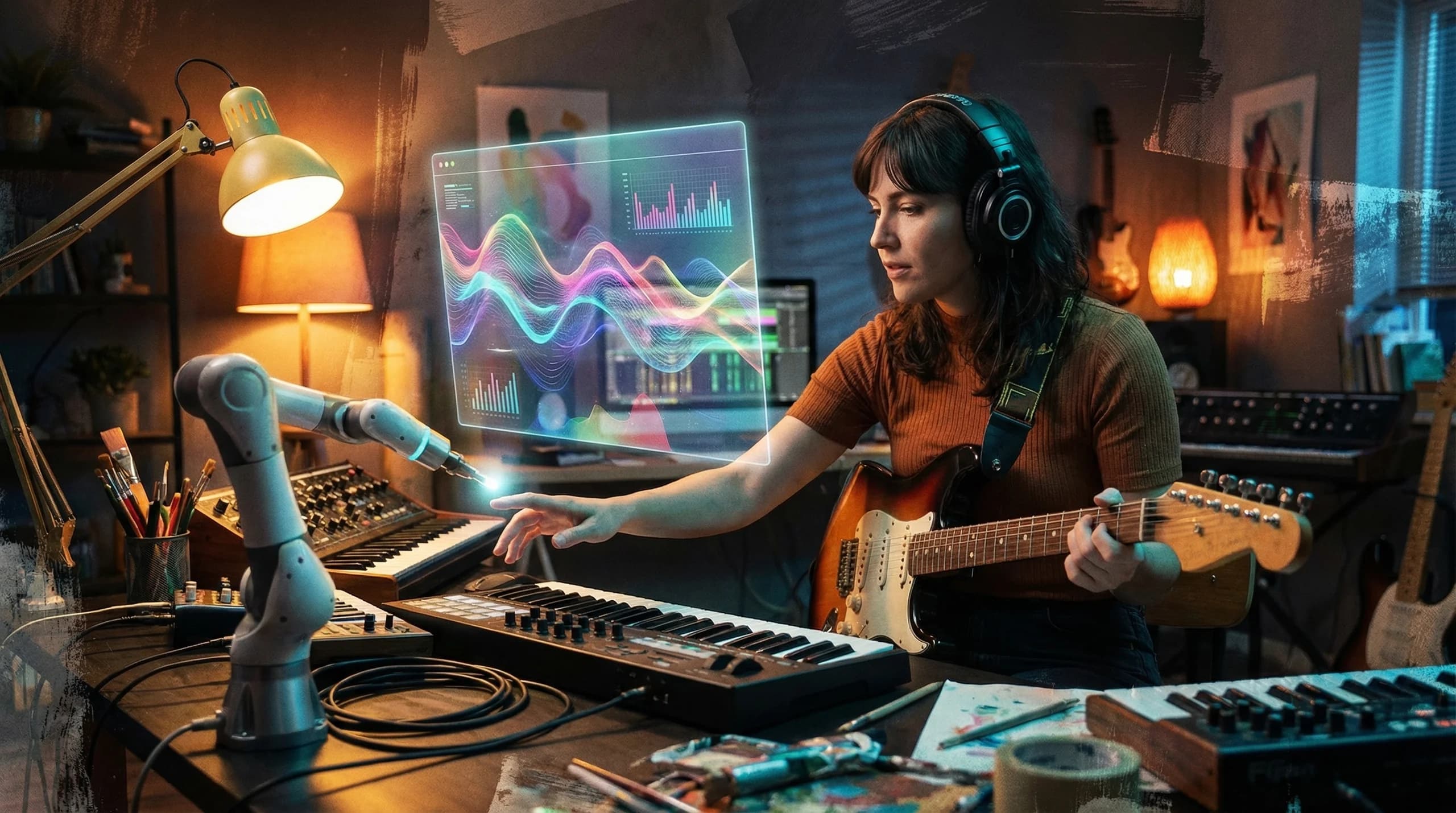
Through 2023 and 2024, AI assistants were single-model and single-turn: you asked, it answered, you closed the tab. The current generation looks different. Multi-agent systems decompose work across specialized agents that plan, retrieve, act, and check each other. In practice, an agent can read the overnight Slack channel, cluster the discussion into themes, open tickets for unresolved blockers, and draft the morning standup before the first human logs on.
Picture a distributed design agency spanning Lisbon, Austin, and Manila. Agents maintain a running decision log; every client call gets summarized, tagged, and linked to the relevant project. Nobody reconstructs context on Monday morning because nobody has to.
The tradeoff is real. The informal learning that once happened by overhearing a senior engineer debug a problem disappears when an agent handles triage. Agents summarize decisions well, but they do not model judgment. Teams that treat agent output as a replacement for mentorship will watch their junior hires plateau.
RAG and MCP Solve Remote Work's Memory Problem
Remote work's biggest casualty is institutional memory. When your company lives in Slack, Notion, GitHub, and a dozen SaaS tools, the answer to "why did we choose this architecture?" is scattered across four systems and one person's recollection.
Retrieval-augmented generation solved half of that problem by grounding model answers in your actual documents. The Model Context Protocol, now adopted across most major AI vendors, solved the other half by giving agents a standard way to reach those systems without bespoke integrations for every tool. Together they turn company knowledge into a queryable asset rather than a scavenger hunt.
A new hire can now ask why the team abandoned a database migration in 2024 and get the original thread, the decision doc, and the follow-up incident report. That used to take three weeks of asking around. It takes seconds now. The cultural consequence is underrated: when memory is cheap, onboarding stops being a social favor and becomes a system property.
Who Gets Left Behind in the Async Transition
The remote work conversation has always had winners and losers, and the agent era will not fix that on its own. Async-first design is a genuine gift to disabled workers, caregivers, and anyone managing chronic illness; the flexibility to work when you can is not a perk, it is access. Global teams gain roles that geography once excluded.
The costs fall unevenly too. Workers without reliable bandwidth or a quiet room are penalized when everything moves to video and always-on chat. Early-career employees lose the apprenticeship model that offices provided by accident. Regional pay bands keep global teams stratified even when the work is identical. Research on 2025 return-to-office mandates has linked them to disproportionate attrition among women and caregivers.
Community groups inside large employers have adapted faster than HR departments. Employee resource groups moved to async channels, documentation-first onboarding, and recorded mentoring sessions. Those practices work. They require someone to own them.
Building Workplace Culture That Survives the Agent Era
Five moves that separate teams getting this right from teams adding another silo:
Measure outcomes, not activity. Retire the dashboard that counts messages sent. Track shipped work, cycle time, and retention instead.
Write it down or it did not happen. Agent-readable documentation is now the primary onboarding surface for a distributed team. Sparse docs mean a useless agent.
Spend synchronous time on judgment, not status. If a meeting exists only to transfer information, an agent can handle it. Keep humans for disagreement, prioritization, and hard calls.
Audit your AI stack for memory, not novelty. Retrieval quality and MCP coverage determine whether your agents reduce coordination cost or create a fourth place where decisions go to die.
Instrument inclusion. Track who speaks in async channels, who gets promoted, and who leaves. Async work hides exclusion unless you deliberately measure it.
The Next Phase Is Architecture, Not Real Estate
The remote work debate has spent five years arguing about office square footage. The next phase gets argued about architecture, both organizational and technical. Companies treating AI agents as a productivity hack will get marginal gains and louder meetings. Companies treating them as coordination infrastructure will rebuild workplace culture around written memory, explicit norms, and human time reserved for judgment.
Braintied's read: the winners in 2027 will not be the fully remote companies or the fully in-office ones. They will be the organizations that instrumented their work well enough to tell the difference, and that treated distributed work as a design problem instead of a policy fight.
Share this article