
You don't need to understand neural networks to benefit from them
If the word "AI" still conjures images of sentient robots and Silicon Valley hype, you're not alone. But the truth is quieter and more practical than the headlines suggest: artificial intelligence has been woven into your daily life for years, and most of it just works.
Here are ten ways you're probably already using AI - and what it actually means for you.
1. Your email inbox sorts itself
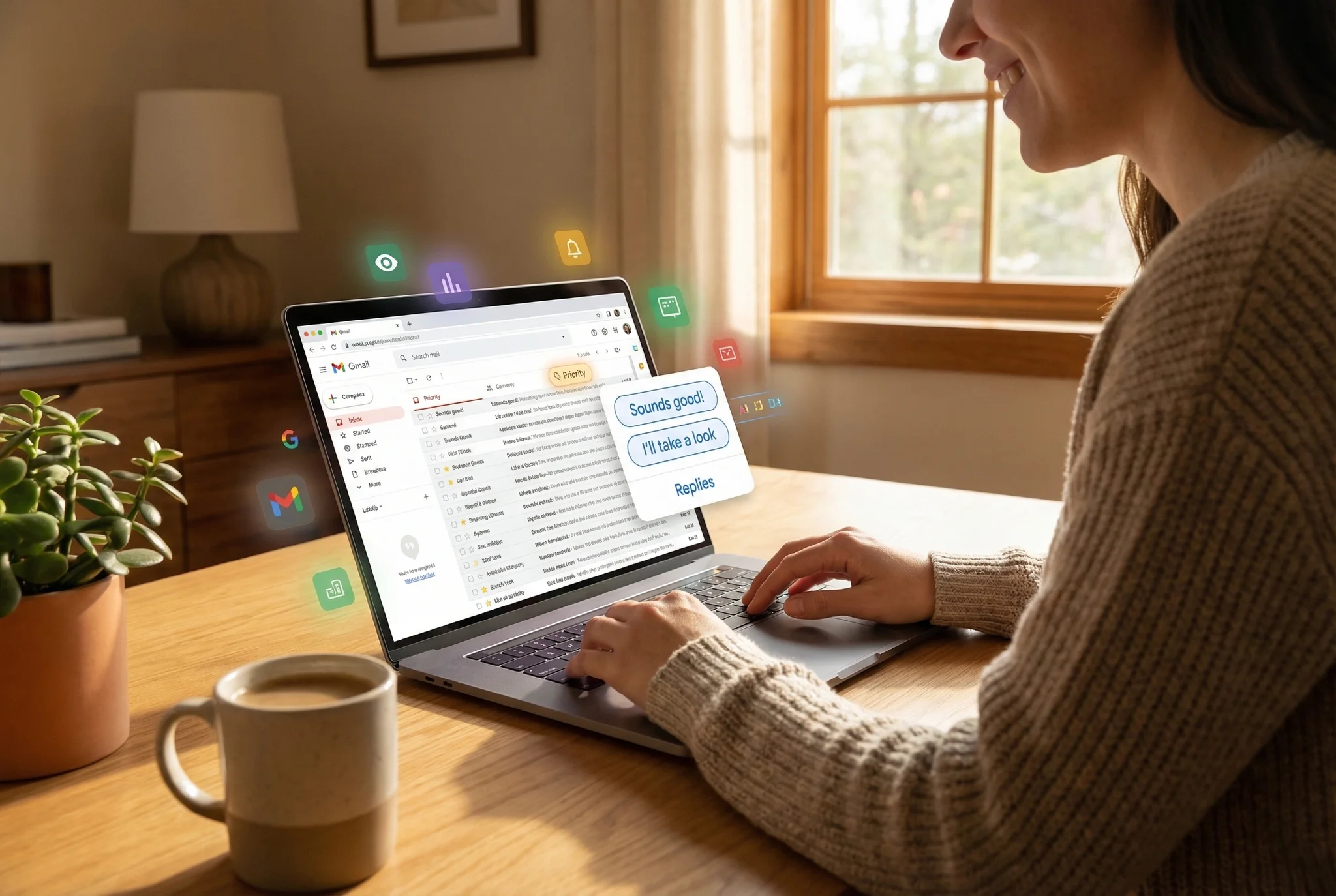
Gmail's spam filter, priority inbox, and smart replies all run on machine learning models. They learn from your behavior - what you open, what you archive, what you report - and get better over time.
2. Your phone photos look professional
Night mode, portrait blur, and auto-enhance on modern smartphones use AI to process images in ways that would have required expensive software a decade ago. That beautiful sunset photo? Computationally enhanced.
3. Netflix knows what you want to watch

Recommendation engines are one of the oldest applications of AI in consumer products. Netflix, Spotify, YouTube - they all use collaborative filtering and deep learning to surface content tailored to your taste.
4. Your GPS reroutes around traffic
Google Maps and Waze use real-time data from millions of phones, combined with predictive models, to estimate travel times and suggest faster routes. That's AI making a practical, everyday decision for you.
5. Autocorrect and predictive text
Every time your keyboard suggests the next word, that's a language model at work. It's a simpler cousin of the large language models making headlines, but the principle is the same: predict what comes next based on patterns.
6. Banking fraud detection
If your credit card company ever texted you about a suspicious charge, that alert came from an AI system analyzing your spending patterns in real time. It's one of the most impactful and least visible applications of machine learning.
7. Online shopping recommendations
"Customers who bought this also bought..." That's a recommendation algorithm. It's been around since the early days of Amazon, and it's gotten dramatically more sophisticated.
8. Voice assistants
Siri, Alexa, and Google Assistant use speech recognition, natural language understanding, and text-to-speech - all AI systems - to process your requests.
9. Social media feeds
The order of posts in your Instagram, TikTok, or Twitter feed is determined by an algorithm that predicts what you're most likely to engage with. Love it or hate it, it's AI.
10. Language translation
Google Translate has improved dramatically thanks to neural machine translation. Real-time translation in video calls is becoming standard. The language barrier is shrinking.
Why this matters
You don't need to be "into AI" to care about this. These systems make decisions that affect what you see, what you buy, and how you communicate. Understanding that they exist - and that they're imperfect - is basic digital literacy.
The good news: you don't need a computer science degree. You just need curiosity and a healthy skepticism. When something feels eerily personalized, ask yourself: is an algorithm involved here? The answer is almost always yes.
And that's not scary. It's just the world we live in.
Share this article