Onboarding by voice
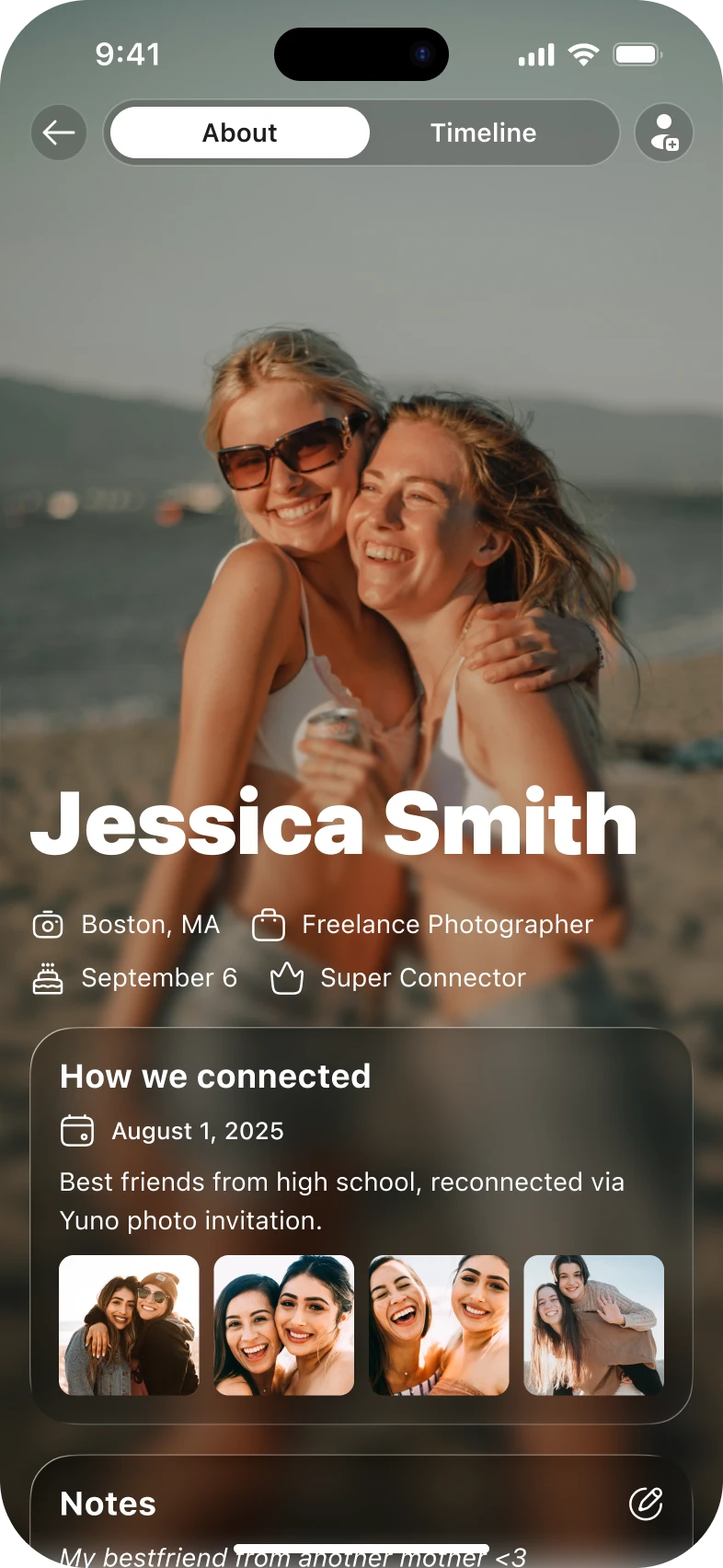
Tell Yuno about yourself out loud, or use a short form.
How it was made
A spoken onboarding conversation with a form fallback.
People who want to stay close to their own friends, not meet strangers
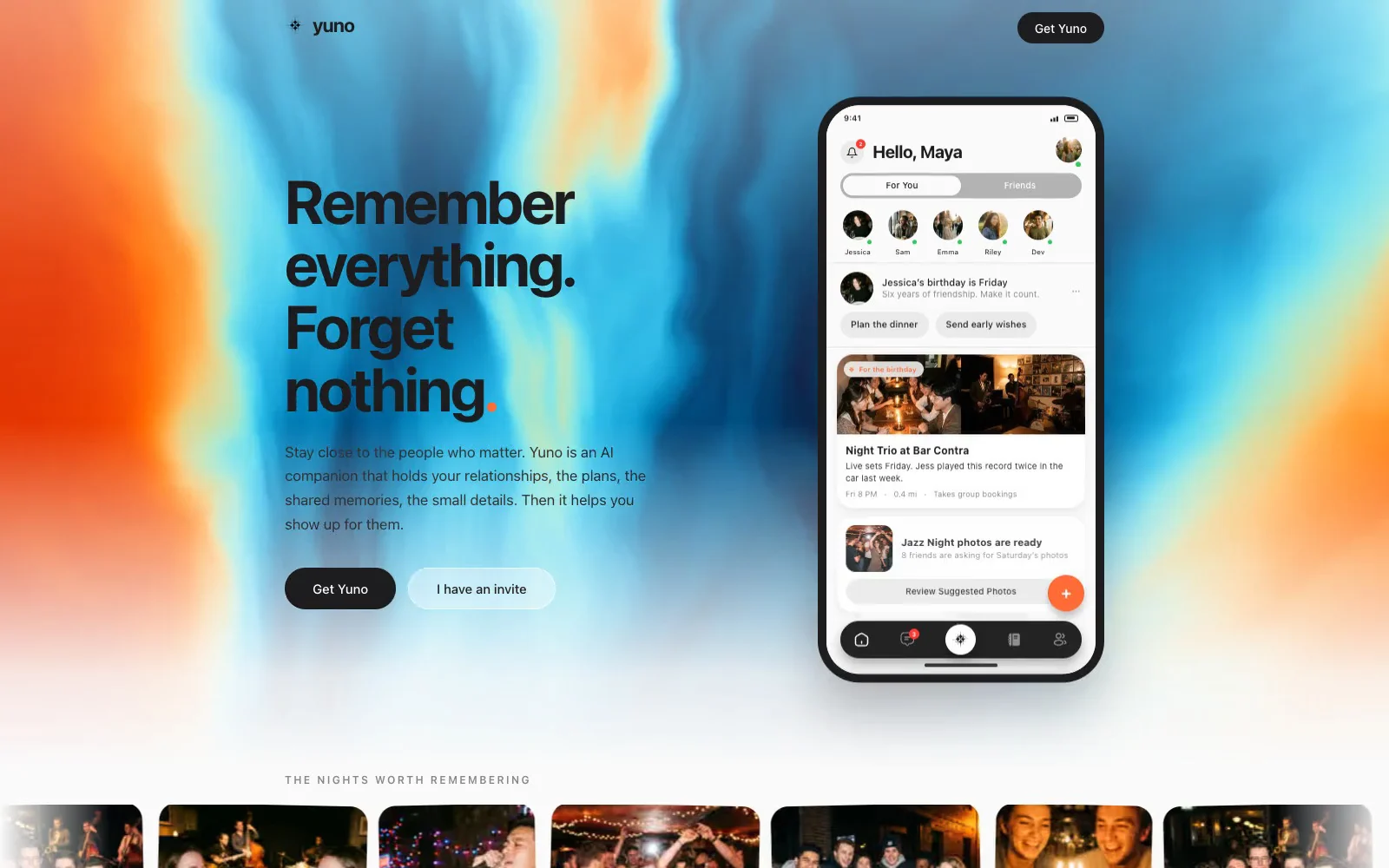
Shown from its designsYuno is a social app for the people you already know. It keeps your circles, plans, messages and shared memories in one place, and an assistant that knows your friends helps you make the plan and remember the moment. Most social apps pull you outward; Yuno pulls you back toward your own people.
What we did
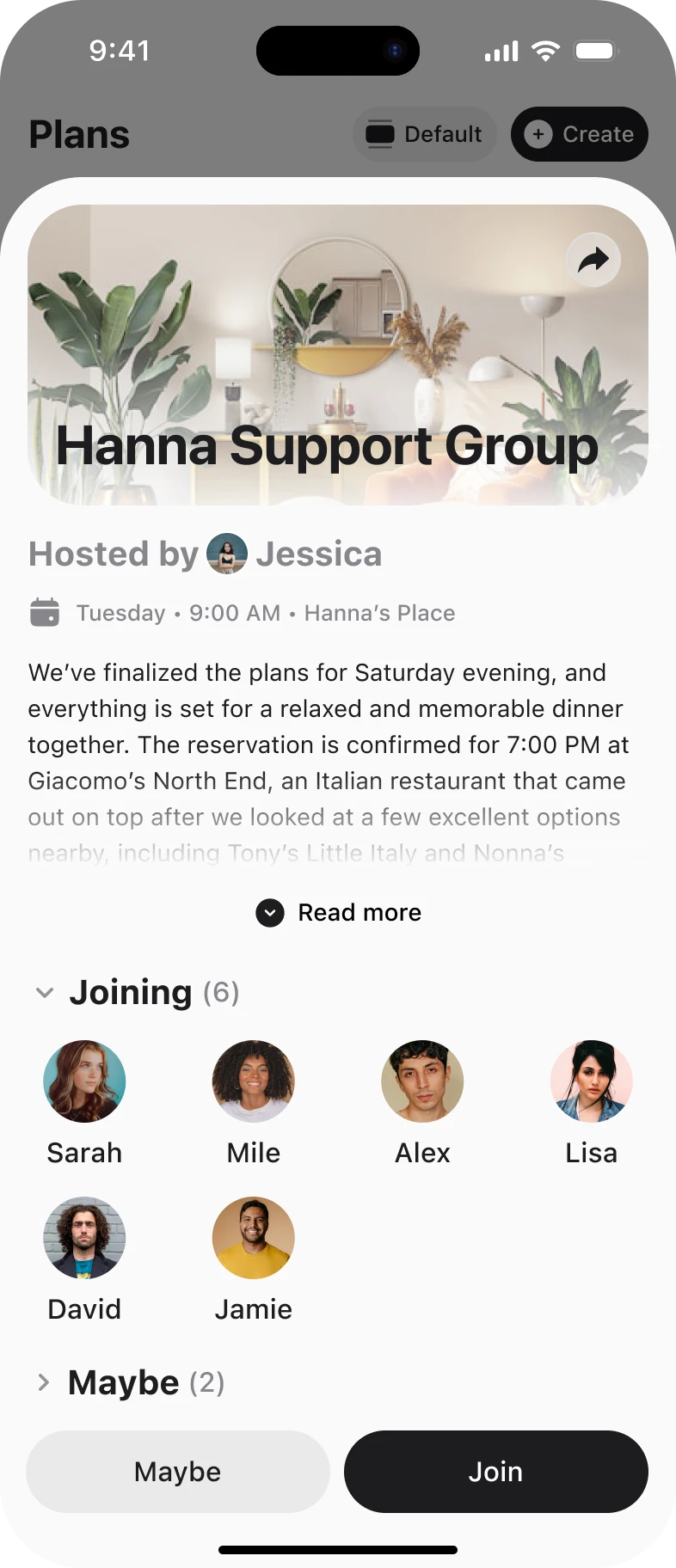
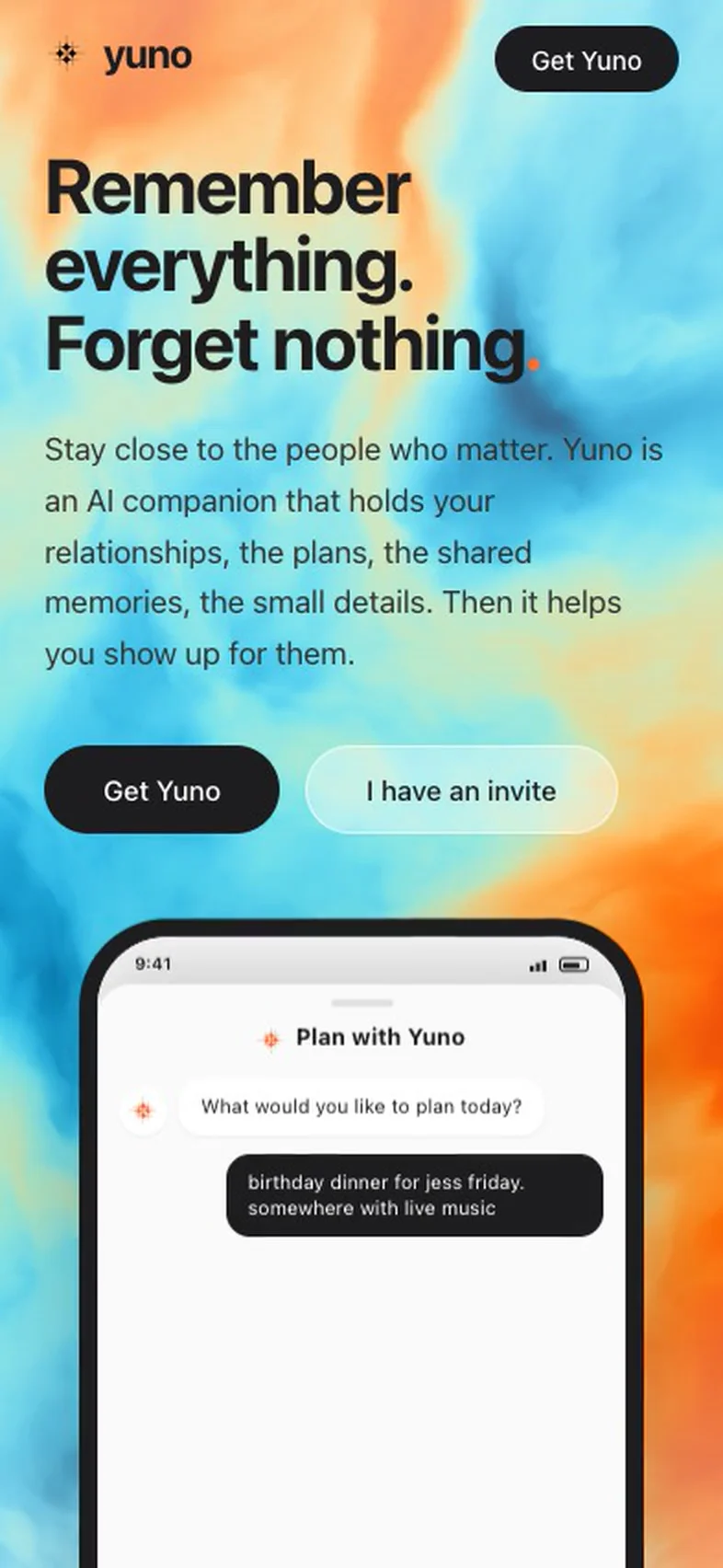
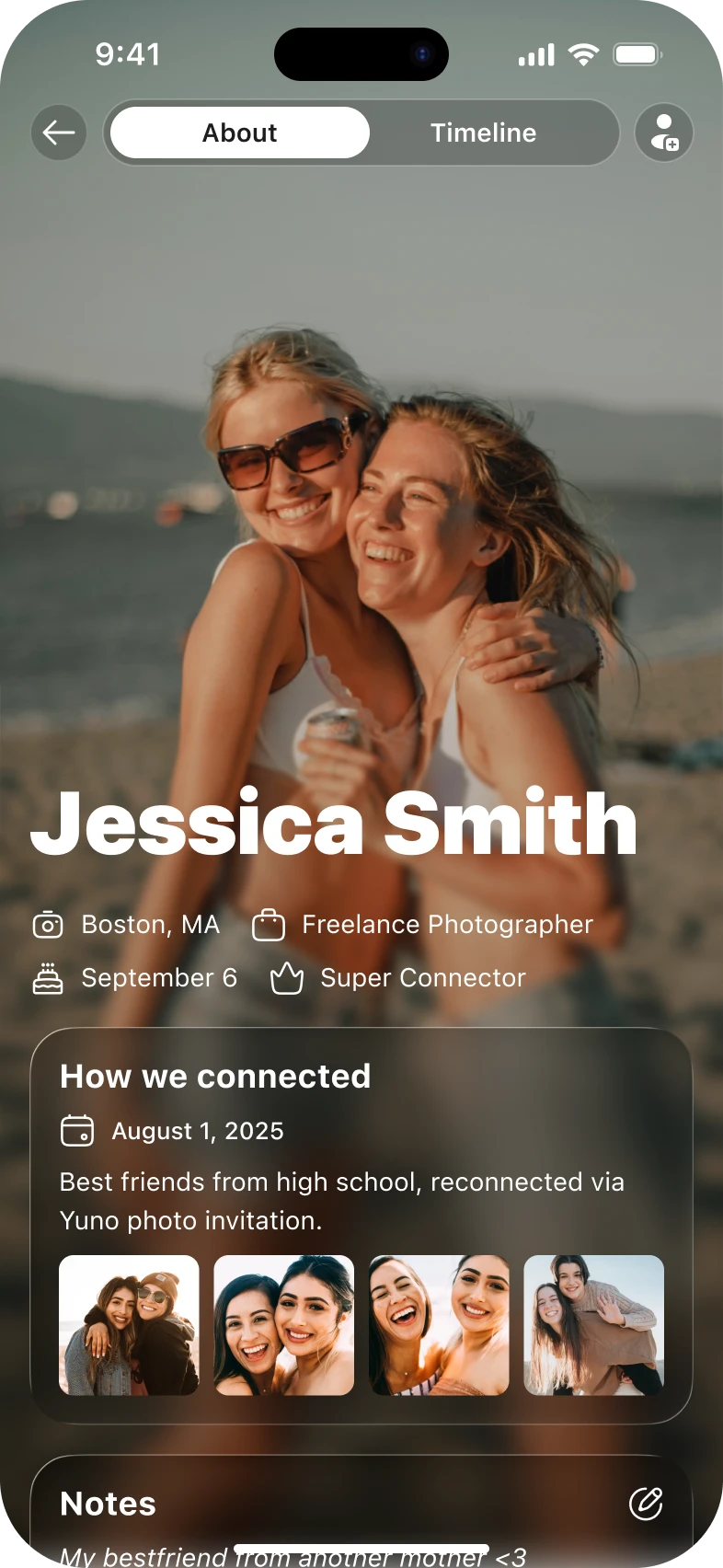
Yuno is our own product. The idea is in the name: people say “you know” to share context about the people in their lives, and Yuno is the app that does know. It began as a photo-sharing concept, became a web prototype with voice onboarding, then a React Native app, and is now a native iPhone app built on the same backend.
Most social apps pull you toward strangers. Yuno had to pull you back toward your own people, and make an AI that knows your life feel warm rather than watchful.

We organised the app around the Circle: the small group you actually make plans with, with its own membership, invite codes and gatherings. Every feature that touches your life had a privacy rule before it had a screen. The microphone opens only after you tap to start a conversation, and private circles never appear in your People list.
The Circle as the core noun, with membership, invite codes and gatherings kept separate
Photo invitations designed per recipient and revocable, with no automatic face matching in the first phase
Consent versioned and off by default for every learning source
Apple-first: a native SwiftUI client, with the React Native app kept as a parity client
We named the product, set its voice and built the visual system in Figma, then generated design tokens that feed both the Swift and React Native apps from one file. The assistant has its own compass glyph, separate from the app logo. Copy stays honest: a control that is not live yet says so.
Canvas
#FAFAFA
Ink
#1D1D1F
Ember
#E55733
Bone
#E8DED3
Secondary text
#86868B
Divider
#EAEAEB
Aa
New users can tell Yuno about themselves out loud before they sign up; once their phone is verified, their interests and preferred name are pulled from that conversation into their profile. From there the app is plans, people and memories: quick plans and a month calendar, group threads with suggested replies, contact import and private notes, and a memory library built from shared photos.
Yuno runs on Supabase Postgres split into identity, social, memory and planning schemas, with 78 migrations and 35 edge functions. The native iPhone app uses supabase-swift, observable domain stores and Postgres change streams for messages and notifications. Invite links resolve on yuno.me through associated domains.
iOS
Cross-platform
Data
Intelligence
Messaging
Web
Voice conversations run on Hume’s empathic voice interface, with a short-lived token issued by the backend so no key ships in the app. Behind the conversation, models are assigned by role and set by server policy: Claude for chat and vision, a faster Claude model for extraction and suggestions, embeddings for memory search, and Gemini for image generation.
The native app is in TestFlight and its App Store listing is prepared as Yuno Social App in Social Networking. yuno.me carries the marketing site, the circle invite route and the app association, with privacy and support pages published alongside.
Tell Yuno about yourself out loud, or use a short form.
How it was made
A spoken onboarding conversation with a form fallback.
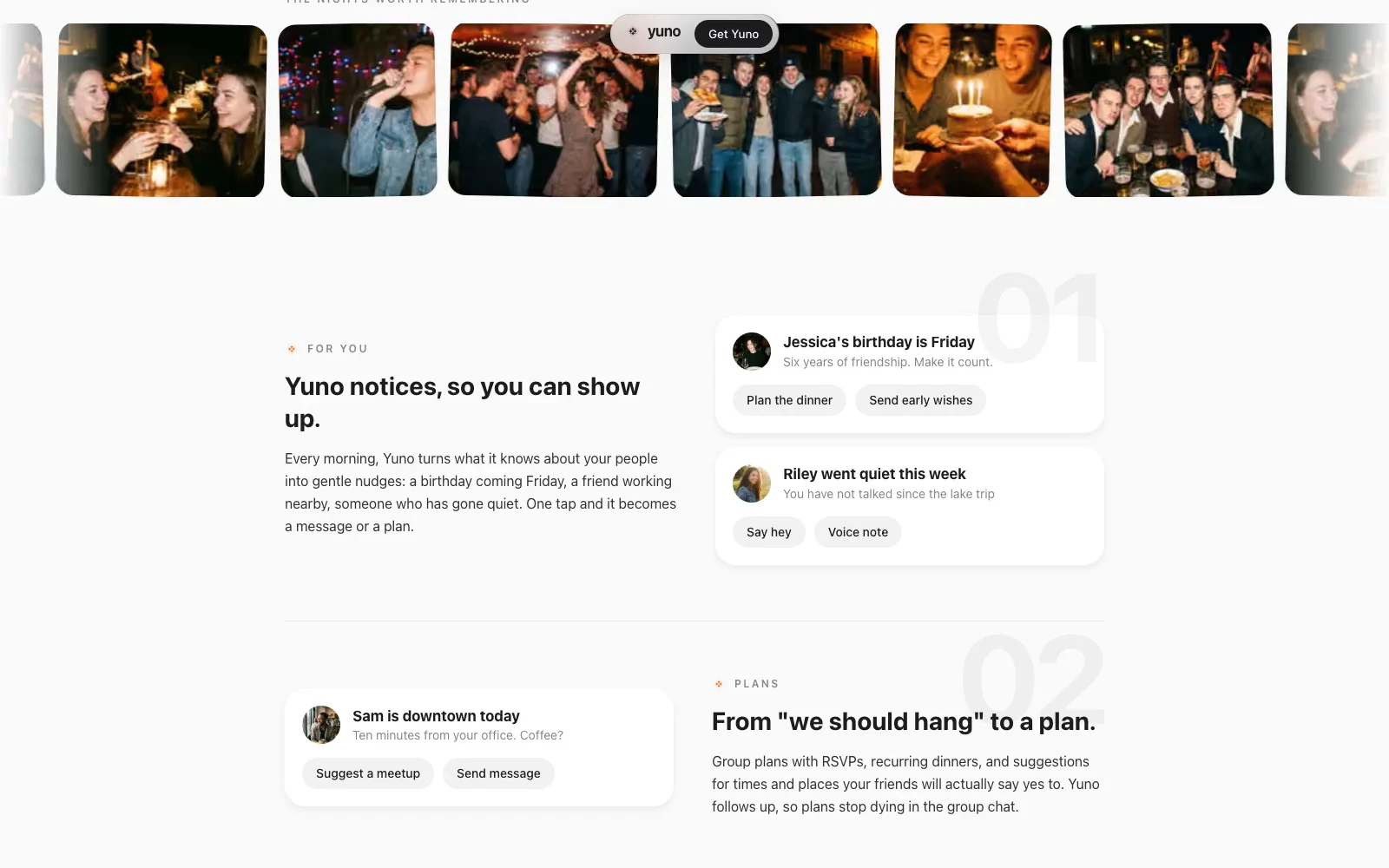
Your camera roll becomes personal invitations for the friends in your photos.
How it was made
Camera-roll photos turned into designed, per-friend invitation cards.

Ask for a plan and Yuno checks everyone’s calendar and drafts it.
How it was made
Voice and chat planning against shared calendars.
Every AI feature and data source has its own switch.
How it was made
Per-source learning controls: activity, calendar, messages, photos, music.
Next project
Mantra
Mantra Dose is a direct-to-consumer functional-mushroom brand whose owners run the company as a DAO. The Temple is where they do it: a board signs in with a wallet, proposes and votes on real operating decisions, and sells shares to an investor through escrow, with every step recorded on chain. We rebuilt the rest of the platform around it, from the storefront to the founders’ portal, on accounts the client owns.
Want one like this?
Tell us about the business. You leave the first call with a direction and a written estimate.