STEM-ED

Middle and high school robotics teams, their parents, and the teachers who coach them

stemed.org

STEM-ED runs the Aerospace Robotics Competition, where students build a quadcopter, code it to fly a mission, pilot it through gates, and defend an ethics decision out loud. The site lets a student do a small version of all four before they register, and gives the parent and the coach every fee, date and rulebook in one place. The page is played, not read: one live 3D launch field sits behind it and every section is a level.

What we did

  • Content migration
  • Information architecture
  • Rebrand
  • UX & interface
  • 3D & interactive
  • Engineering
  • SEO
  • Launch
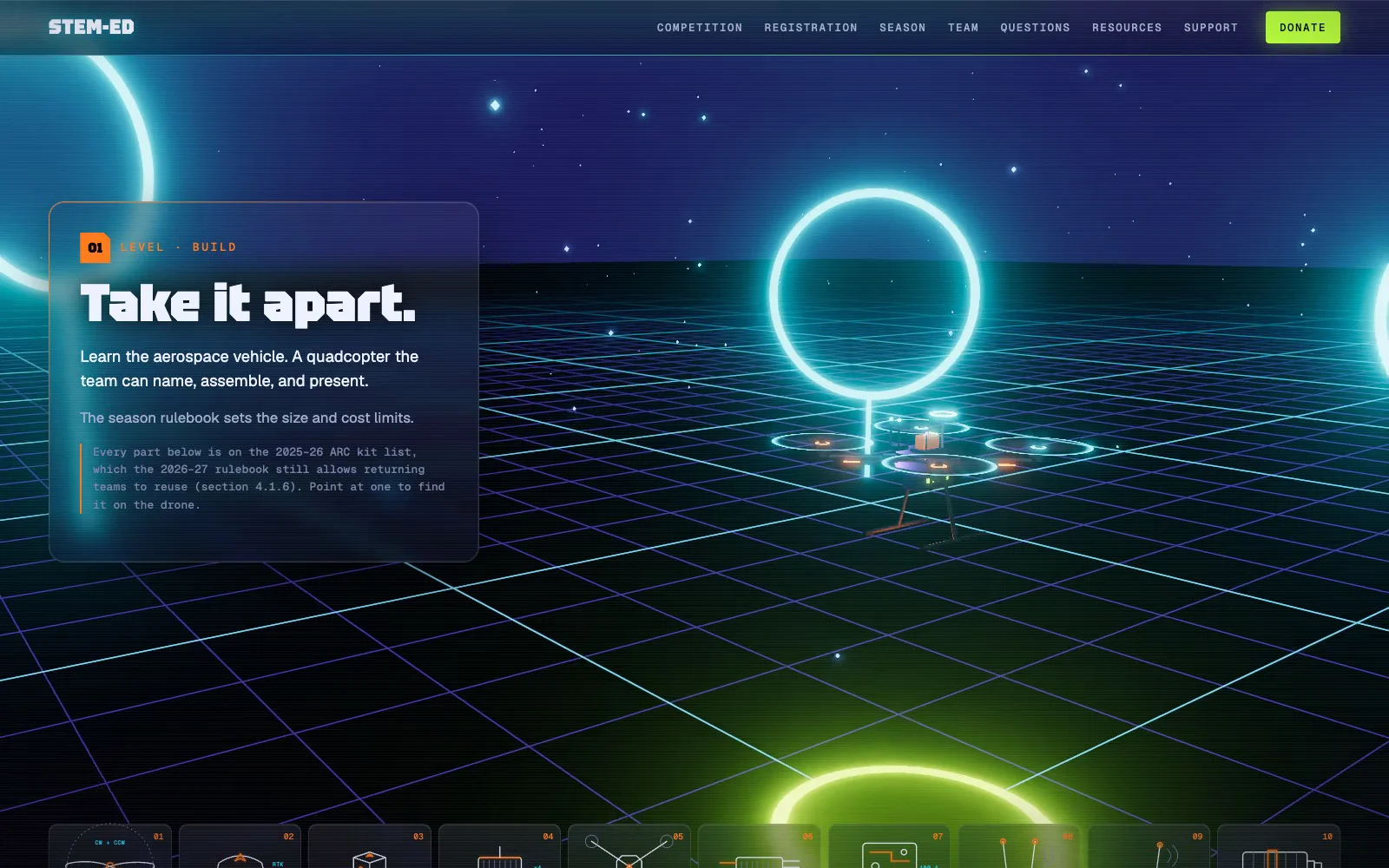
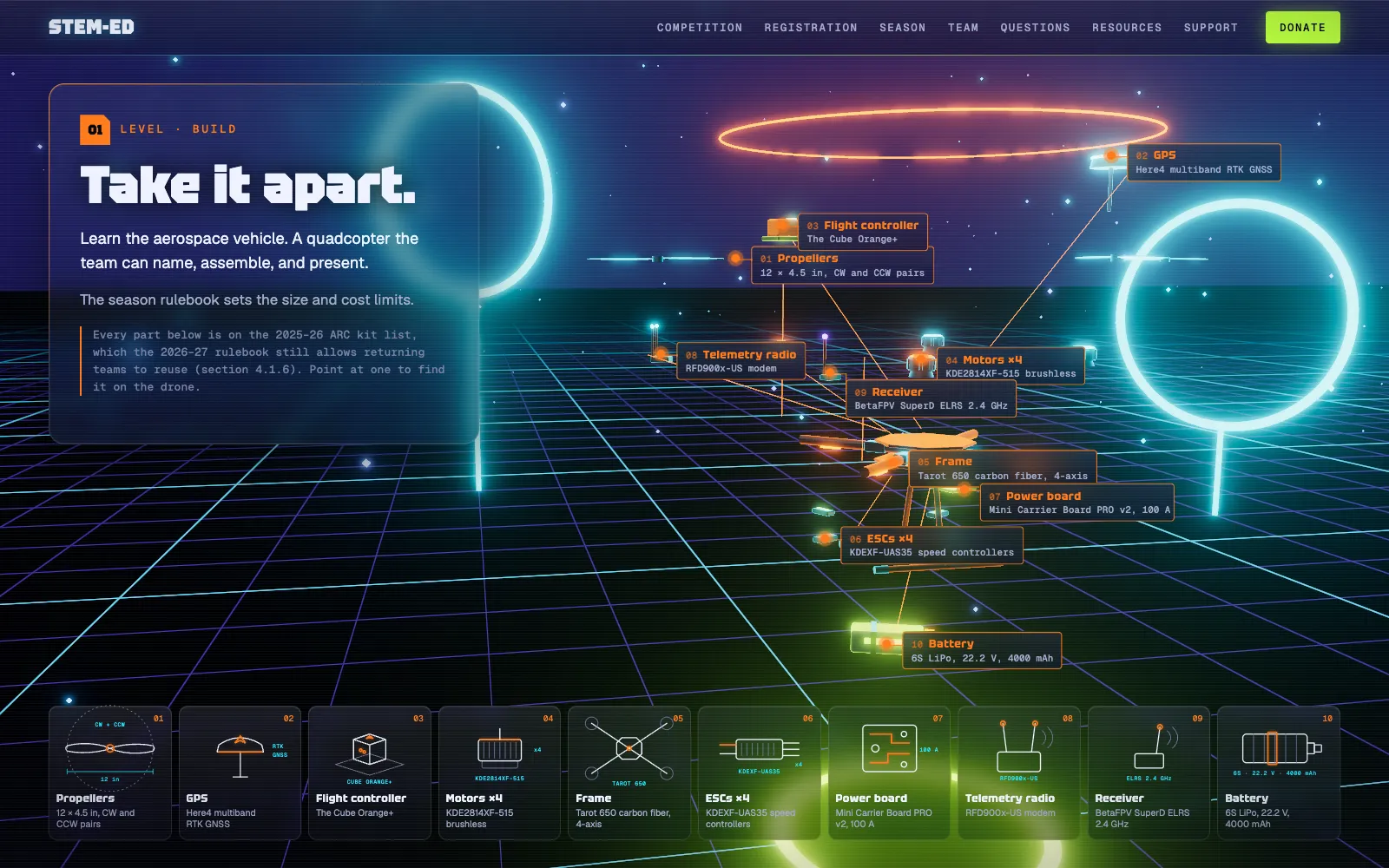
STEM-ED: on the 3D launch field the quadcopter comes apart into its labeled parts as the page scrolls, then a parts card lights its piece
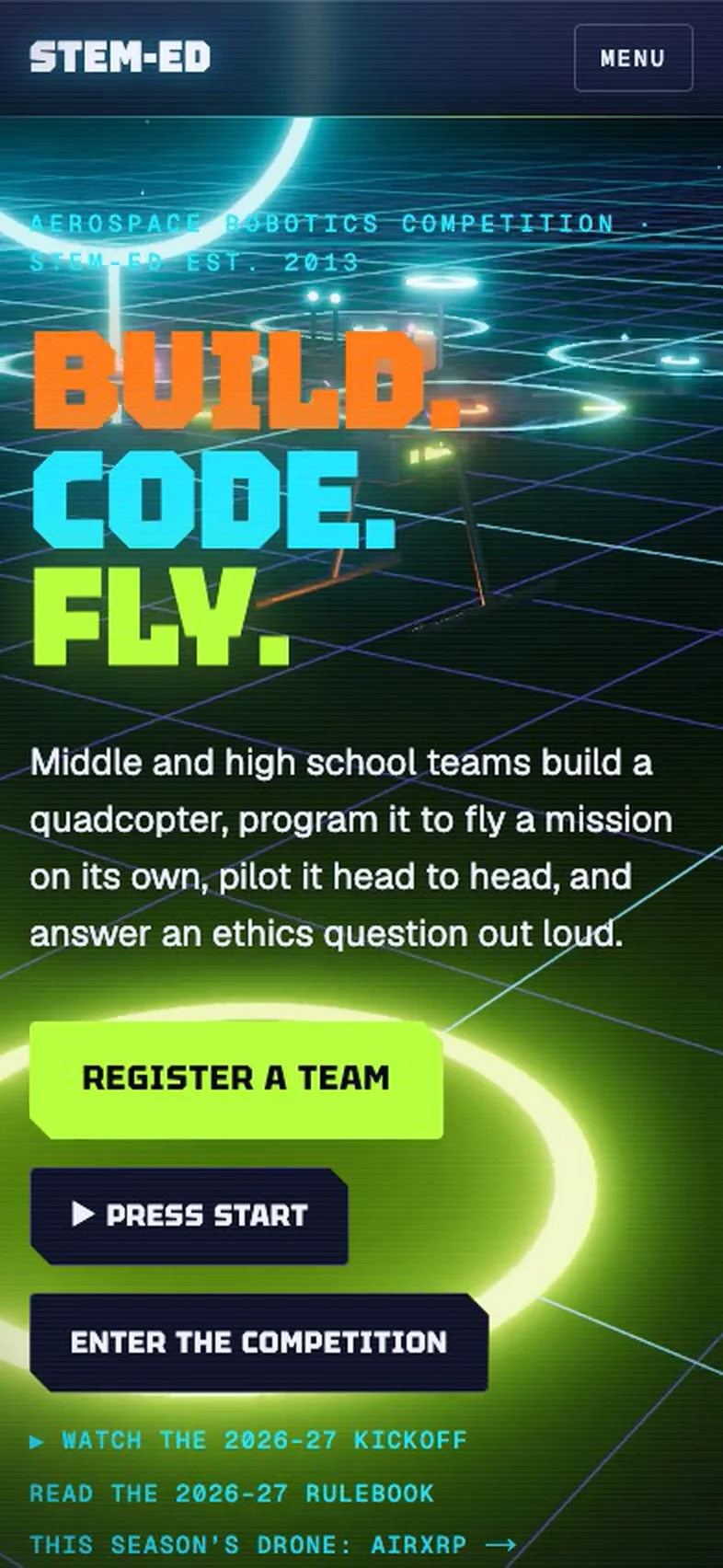
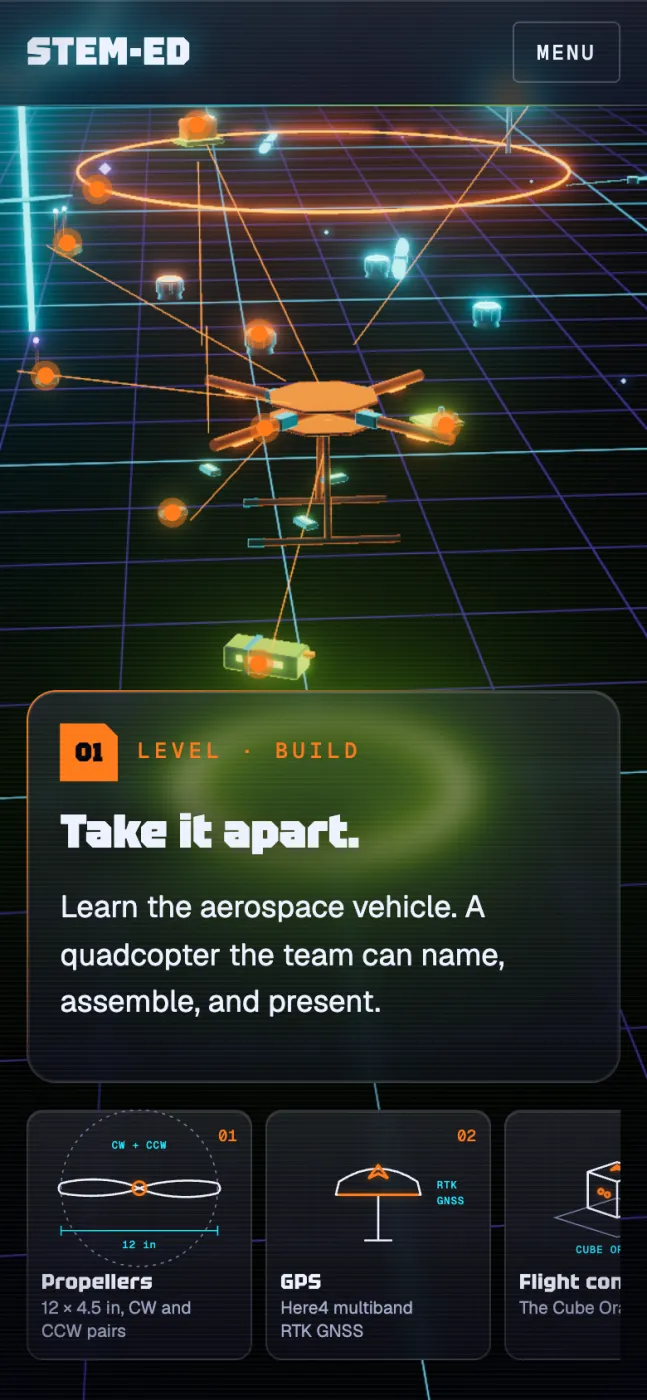
STEM-ED on a phone: the BUILD. CODE. FLY. hero over the 3D launch field, then the drone breaking into its parts

Where it started.

STEM-ED came to us with a Squarespace site: years of published copy, rulebooks as PDFs, team registration and forms spread across services. They needed a site that made a twelve-year-old want to join and still answered the parent paying the registration fee, without losing a single page, link or season record from the old one.

Make a competition about building, coding, and flying feel like all three before a student reads a word, and still work for the parent paying the registration fee and the teacher reading the rulebook.

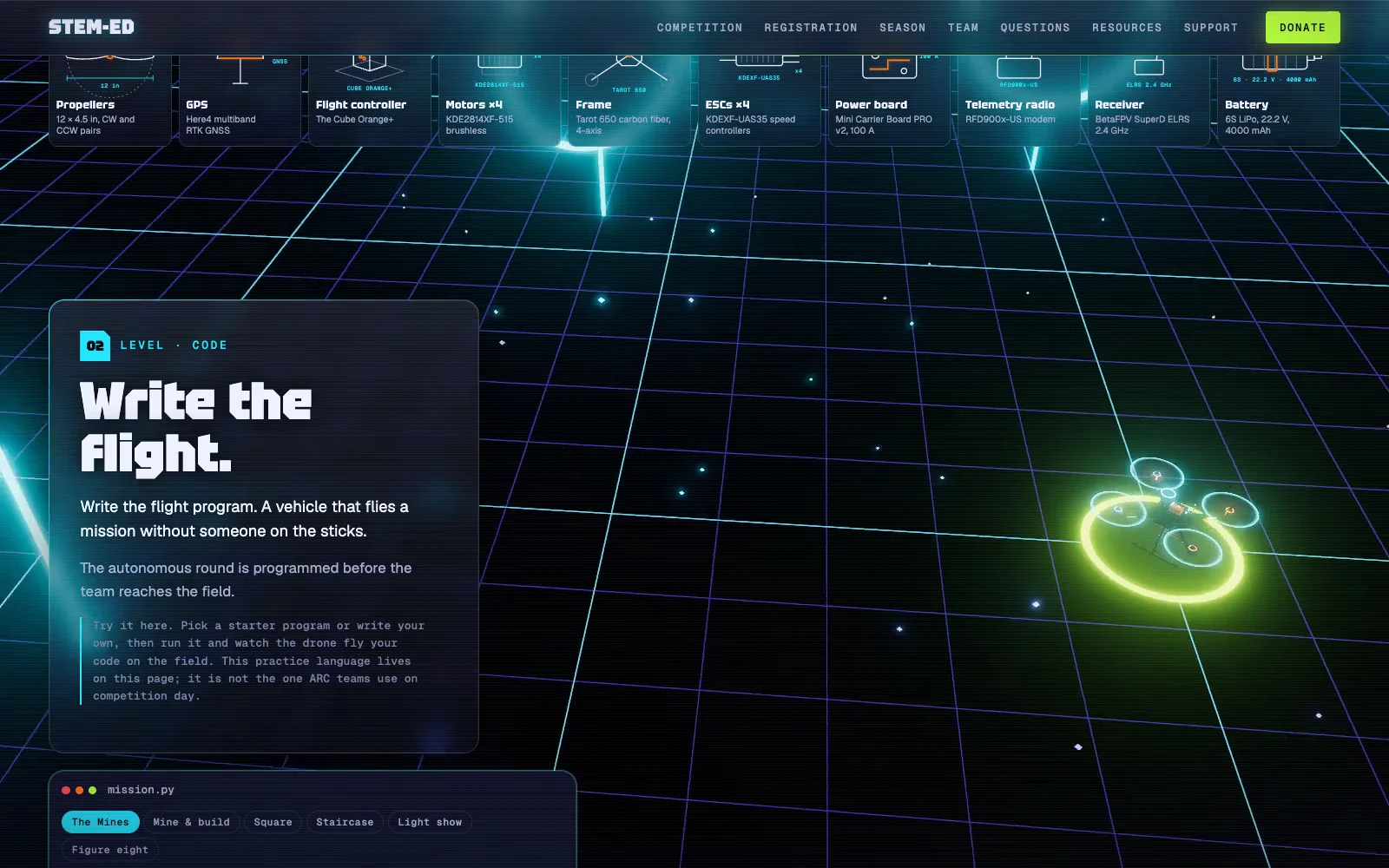
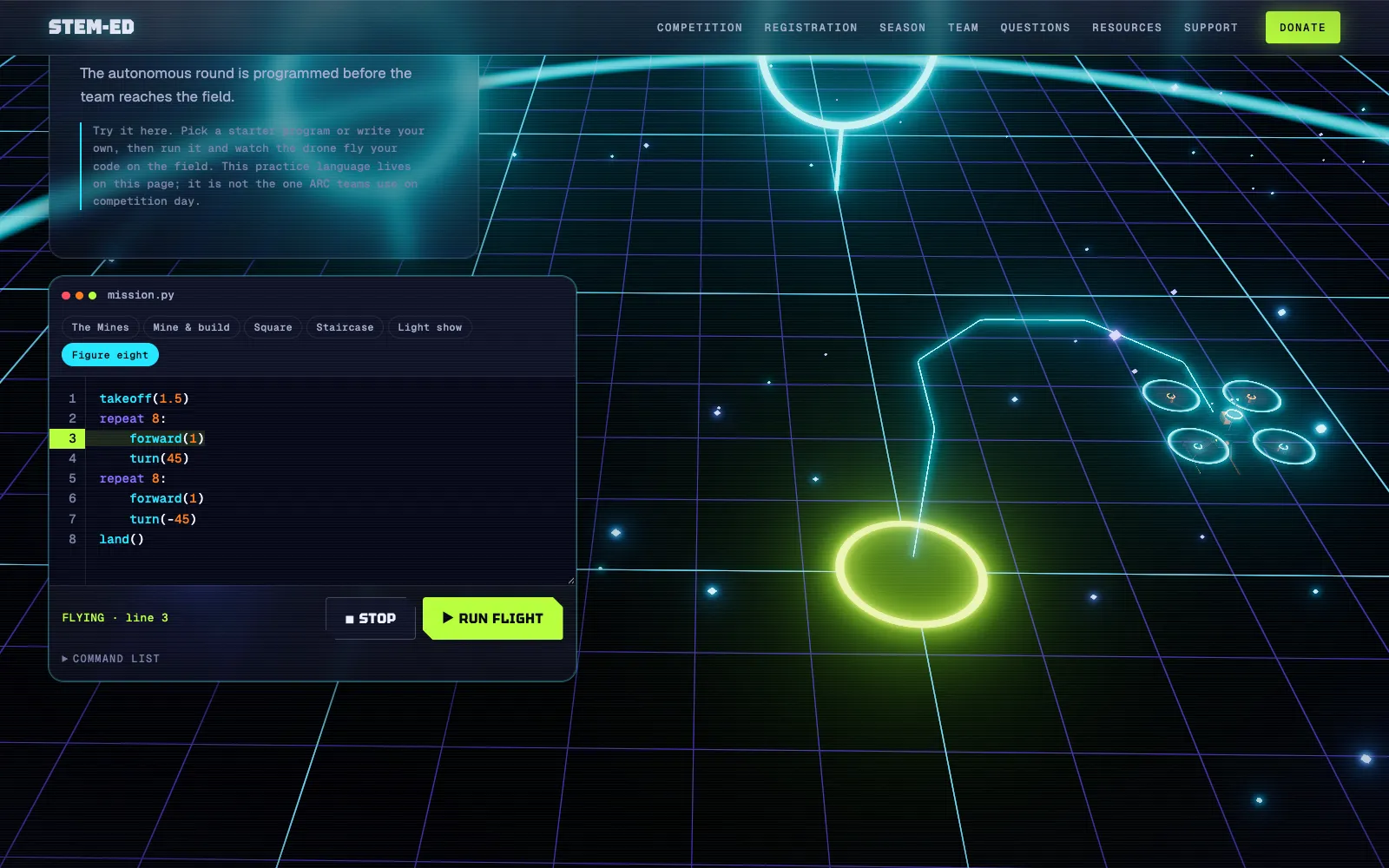
STEM-ED: the Write the flight code lab runs a mission program line by line while the drone flies it across the neon field
STEM-ED on a phone: the BUILD. CODE. FLY. hero over the 3D launch field, then the drone breaking into its parts

The engagement.

Every part of STEM-ED we owned, from the first idea to the system running underneath it.

Build, code, fly, account: four levels, one season

We organised the whole competition around the four things a team actually does, and made each one a level of the homepage. Before any design, we moved every public page and linked rulebook off Squarespace into a content model, so the new site carried the full published record from the first build.

Every public sitemap page and linked rulebook copied into a typed content model

Four levels (Build, Code, Fly, Account), then Mission Select, Crew and Launch

Old Squarespace addresses 308 to the page that replaced them, generated from the content model

Superseded pages canonicalised so last season’s fee never competes with this season’s

Team registration moved onto the site, with this year’s drone named and linked from the hero

Four signal colours, each with one meaning

The rebrand put STEM-ED on a night flight field seen through a game HUD. Each colour carries one meaning across the page and the 3D scene: orange for hardware, cyan for code, lime for flight, violet for the human decision. One token file feeds both the CSS and the renderer, so the page and the world cannot drift apart.

  • Palette: Void #04050D, Build orange, Code cyan, Fly lime, Account violet
  • Orange chosen because the kit’s flight controller is the Cube Orange+
  • Tektur for display, Geist for reading, Geist Mono for HUD labels
  • Headings that resolve like a decoding signal while staying server-rendered
  • Glass tokens for every card and panel, with separate values for phones

Void

#04050D

Panel

#0F1226

Build

#FF7A1A

Code

#22E6FF

Fly

#B8FF3C

Ink

#EEF2FF

Aa

Display
Tektur
Body
Geist
Telemetry
Geist Mono

A code lab that flies the drone you just took apart

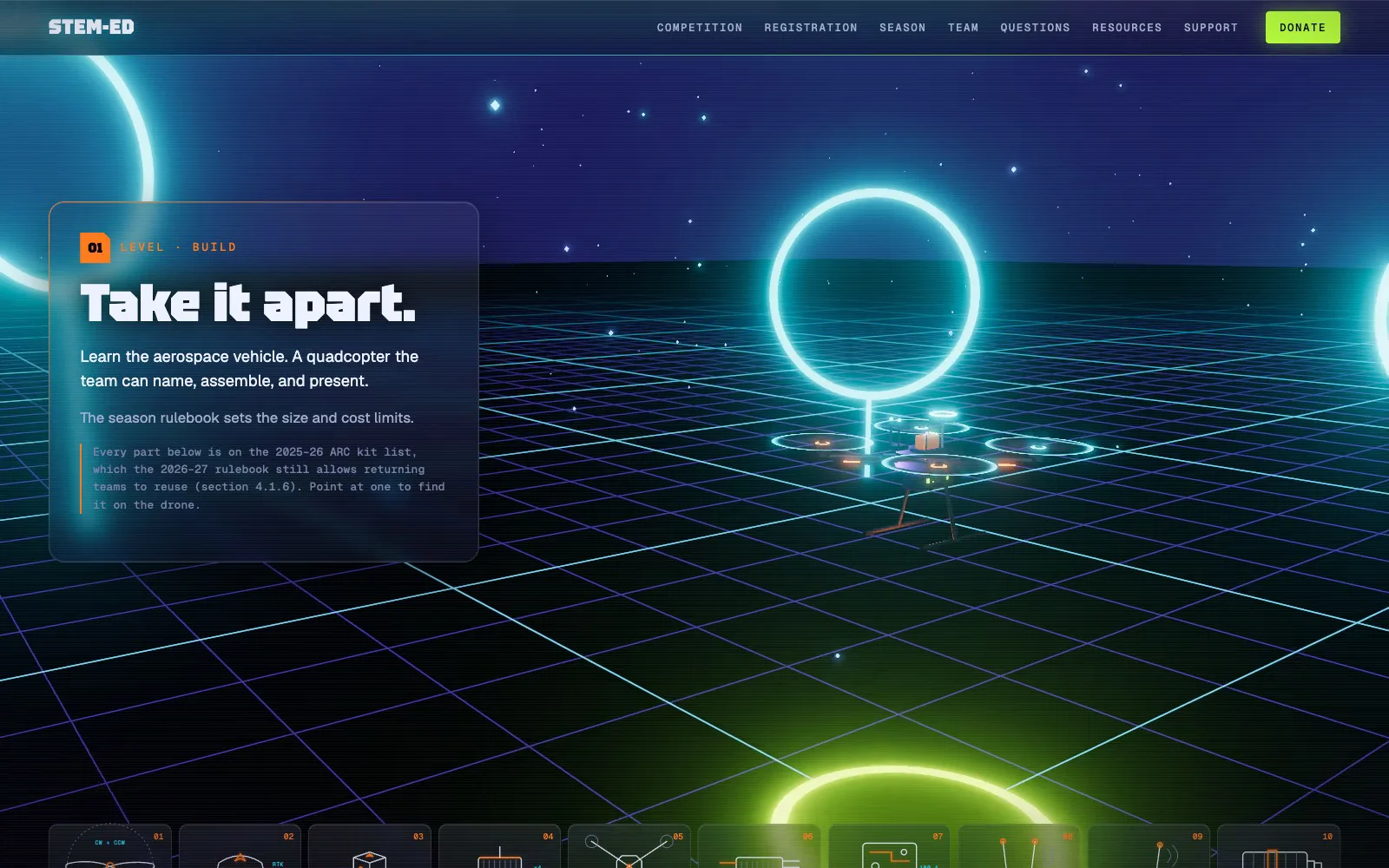
Scrolling the Build level pulls the season drone apart into the parts on the real kit list, each with a pinned label. The Code Lab runs a small Python-flavoured practice language and flies the student’s program over the field, highlighting the running line. Fly mode is a seven-gate course on the keyboard or two touch sticks in the same Mode 2 layout as the team’s radio.

  • Exploded drone built from the season kit list, mirrored in a text parts list
  • Flight language with 53 checked cases; errors name the line and what to do
  • Seven-gate pilot run with a HUD for gates, time, altitude and speed
  • A public top-ten leaderboard posted from the finish card
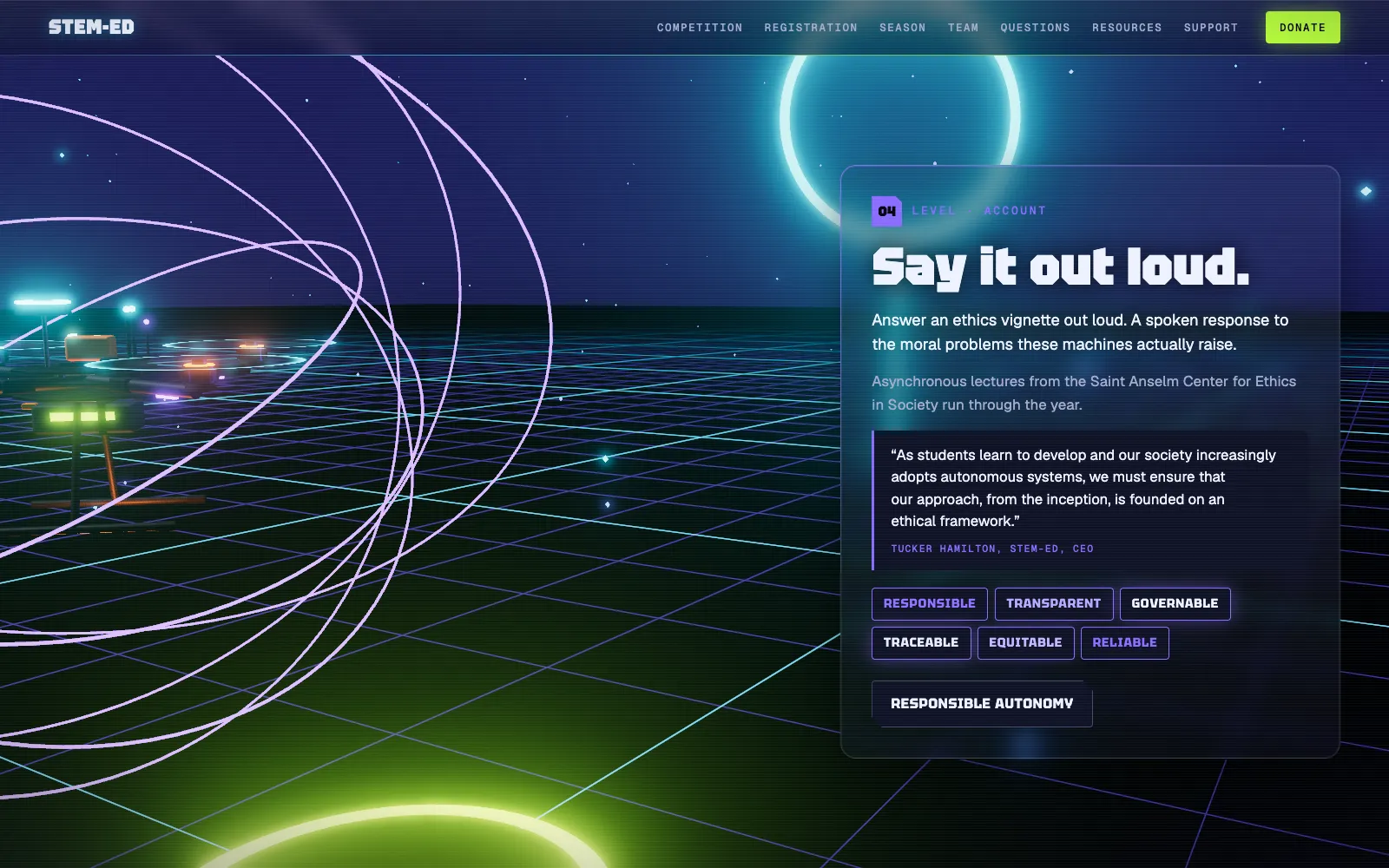
  • Ethics level: six published principles orbiting the drone beside Tucker Hamilton’s quote
  • Rulebooks and kit lists rendered as designed documents at /doc, not raw PDFs
STEM-ED: the Write the flight code lab runs a mission program line by line while the drone flies it across the neon field
Take it apart: the season drone exploded into parts with labeled callouts and a parts rail

A 3D world that never costs a slow phone its page

The world runs on three.js with the WebGPU renderer and TSL shaders, falling back to WebGL2 on its own. A still poster of the real scene paints with the page; the live canvas only takes over after its first frame, and a quality governor steps down bloom and pixel ratio when frames run long. Devices with reduced motion, Save-Data or little memory keep the poster and never load the engine.

  • Cold-cache first frame cut from 3.57 s to 1.04 s on a production build
  • Three quality levels chosen from measured frame time after a warm-up
  • Engine loads only on pages with a chapter section and is torn down on navigation
  • Registration, contact, volunteer and sponsor forms post straight to a hosted forms service
  • Form email sent from STEM-ED’s own mail domain and accepted only from stemed.org

Interface

  • Next.js 16
  • React 19
  • TypeScript

3D

  • three.js 0.186 WebGPURenderer
  • TSL node materials and bloom
  • WebGL2 fallback

Forms and leaderboard

  • Hosted forms with a CRM contact per entry
  • Resend from mail.stemed.org
  • Zod

Search

  • JSON-LD structured data
  • Sitemap and legacy redirects
  • llms.txt

Infrastructure

  • Vercel

Live on stemed.org with the season’s answers machine-readable

The site went live at www.stemed.org on 2026-10-03, with the bare domain redirecting to it. The FAQ is the single source for the page, its structured data and the season facts published for AI assistants, and each answer is one dated sentence from the rulebook.

  • FAQPage, VideoObject and Event structured data built from the content model
  • /llms.txt, /llms-full.txt and /ai.txt lead with current season facts
  • Mobile Lighthouse on the home page from 74 to 92 for performance, accessibility 100 on every audited page
  • Sitemap lastmod read from git
  • A link checker that fails the build on any broken stemed.org link
  • Kickoff video behind a lazy cover so the page requests no video bytes until play
Live at stemed.org

Running in your browser.

The code lab: every line of flight script moves the drone through the gates. Built in code from the product's own design tokens, so it stays sharp at any size.

The product, in motion.

Inside the build.

The moments that make the product, and how each one was made.
STEM-ED: on the 3D launch field the quadcopter comes apart into its labeled parts as the page scrolls, then a parts card lights its piece

One 3D world behind the whole page

A night launch field, a gate course, and a quadcopter. Each chapter of the page moves the camera: showcase, exploded build, coded flight, piloted gate run.

How it was made

three.js WebGPU renderer with a WebGL2 fallback; a procedural drone; low-power devices get a still poster.
STEM-ED: the Write the flight code lab runs a mission program line by line while the drone flies it across the neon field

The drone, exploded

Every part of the competition kit floats apart with a live label. Hover a part in the kit list and it lights on the model.

How it was made

Labels pinned to 3D anchors projected to screen space every frame.

Take it apart: the season drone exploded into parts with labeled callouts and a parts rail

A code lab that flies

Students write a few lines in a tiny flight language and watch the drone fly them, with the running line highlighted.

How it was made

A small interpreter driving the same 3D scene the page uses.

Code lab: a mission.py figure-eight program runs line by line while the drone flies the path on the 3D field

Pilot mode and a leaderboard

A keyboard-flown gate run with a telemetry HUD. Finished runs post to a public top-ten.

How it was made

Run results written through Parlor Forms; headings resolve in like a decoding signal while staying server-rendered.

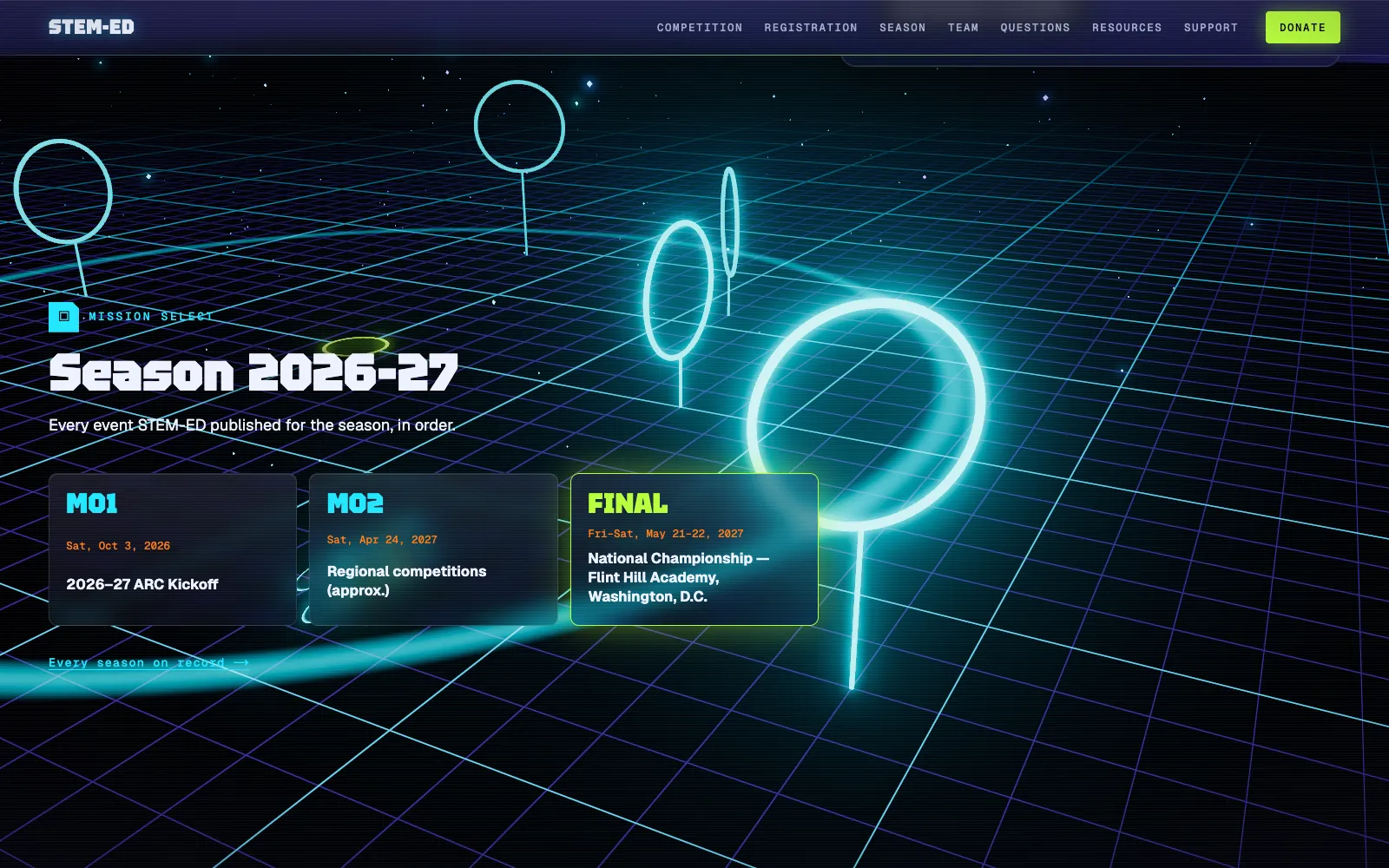
STEM-ED season section
STEM-ED registration and resources