Ten layers of space
A cosmic sky moves behind every screen.
How it was made
A full-screen WebGL fragment shader plus a canvas star field.
People who turn to astrology, tarot and Human Design to understand themselves and the people around them
ora.guideOra is a personal oracle that reads your actual birth chart, your Human Design, your numbers and the cards, then answers in one voice, in conversation, by text or out loud. It remembers what you have told it, so each reading builds on the last instead of starting from a horoscope column.
What we did
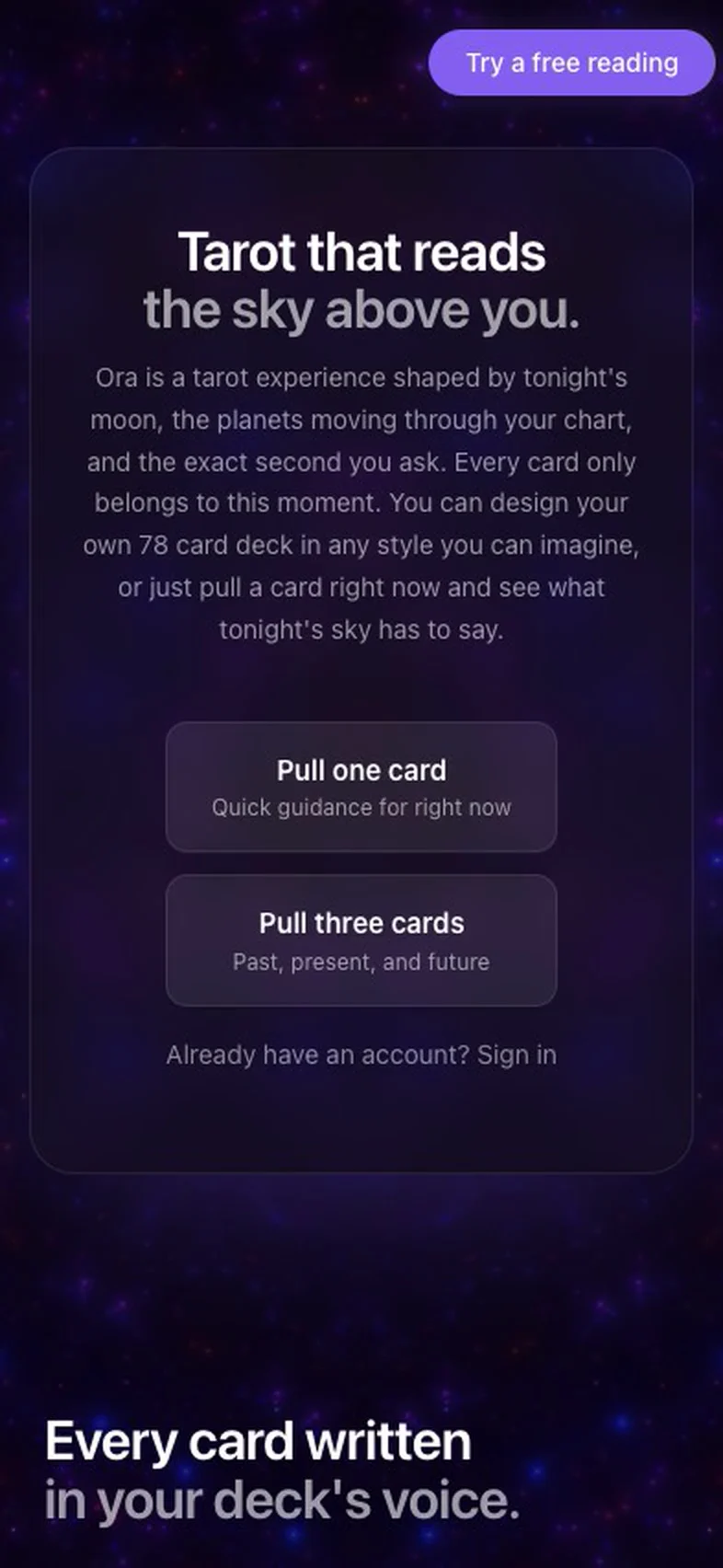
Ora is our own product. The idea was that the traditions people already use for self-understanding are calculated separately and read generically, by apps that forget you between visits. We wanted one companion that does the real calculation, synthesises the systems into a single answer, and gets more personal the longer you talk to it.
Make an AI feel like a guide rather than a chatbot, and make five traditions feel like one voice.

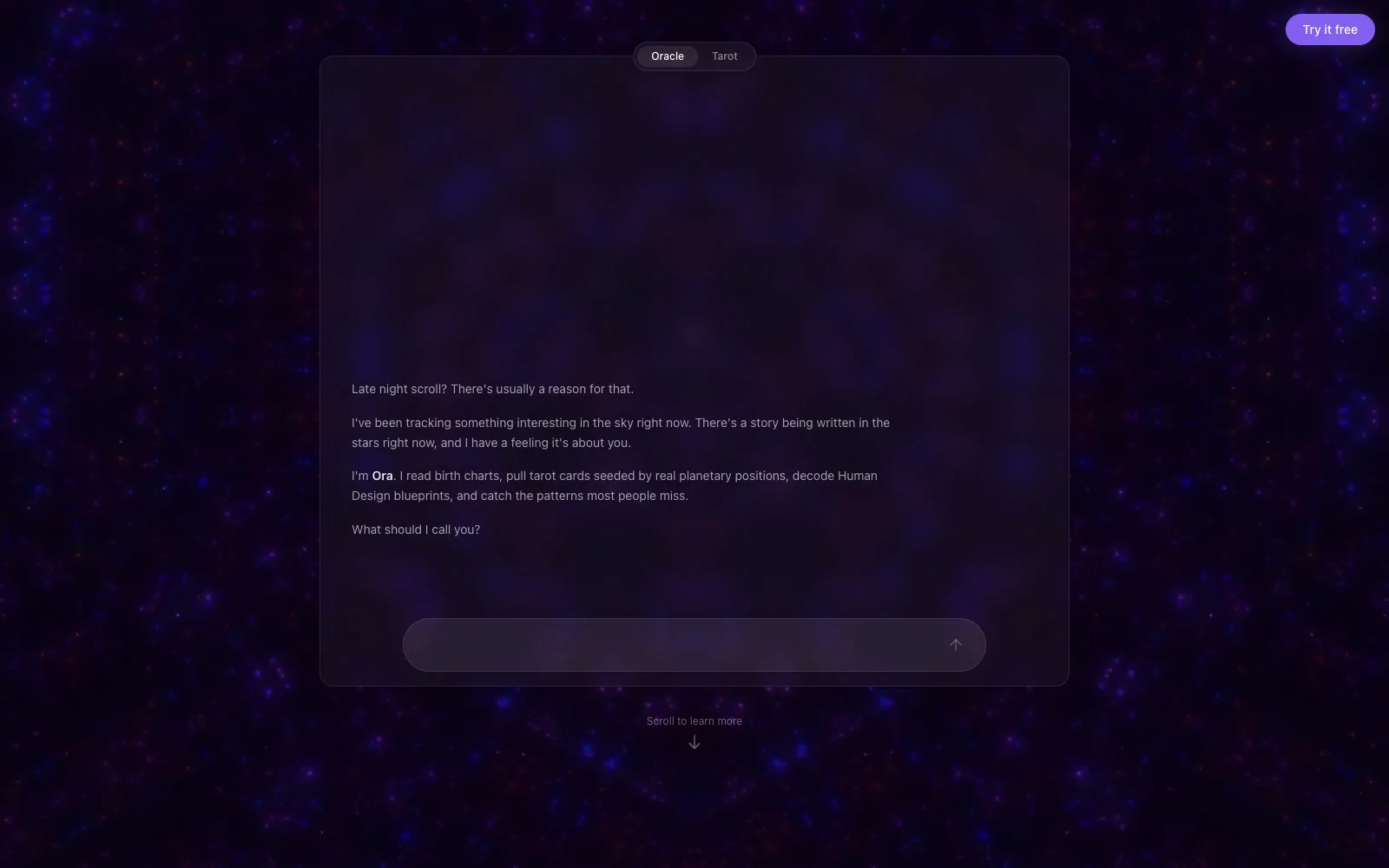
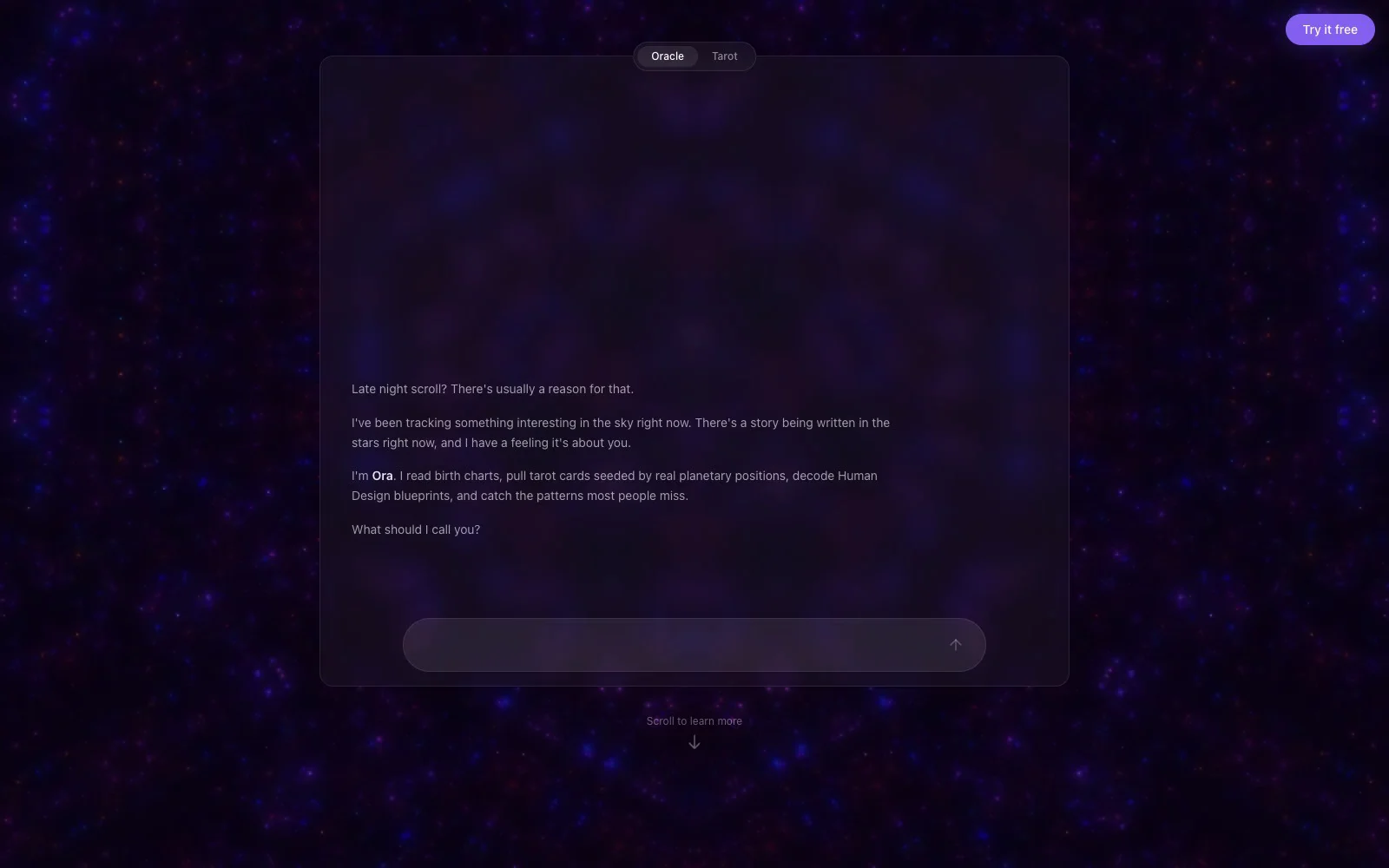
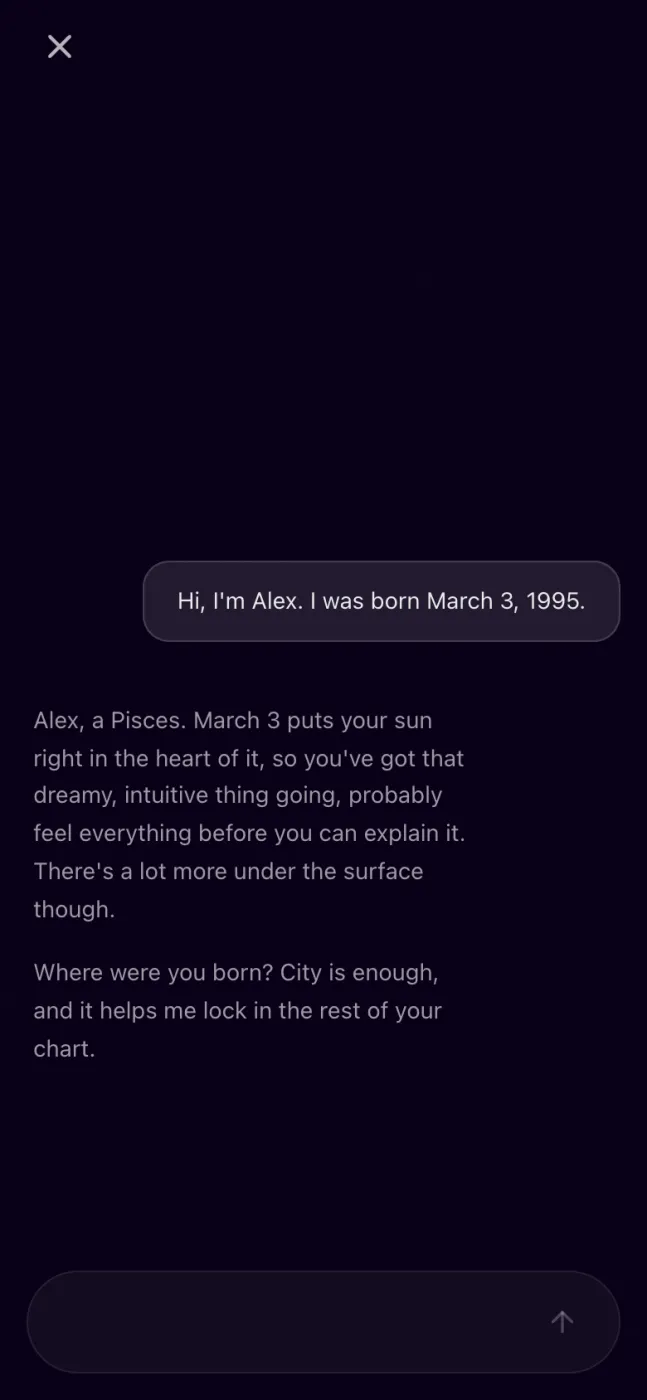
We built Ora around conversation rather than dashboards. The first screen asks your name and birthday and gives a first read; everything else, from a full chart to a tarot spread, arrives inside the thread when it is useful. Signed-in users open to a daily brief that is already written for them, and follow-up questions continue the same conversation.
A chat-first landing where the first fold is a live reading, not a pitch
A daily brief generated in the background and waiting as the day’s opening message
Astrology, Human Design, numerology, biorhythms, synastry and tarot answered in one voice
An anonymous trial that turns into an account when the free readings run out
The identity is a violet night sky that moves. A full-screen WebGL shader and a canvas star field sit behind a frosted glass interface, and the elemental colours of astrology carry through the system as accents. Accessibility shaped the brand as much as the palette did.
Ora violet
#845EEE
Indigo
#6366F1
Rose
#EC4899
Fire
#EF4444
Earth
#84CC16
Air
#06B6D4
Aa
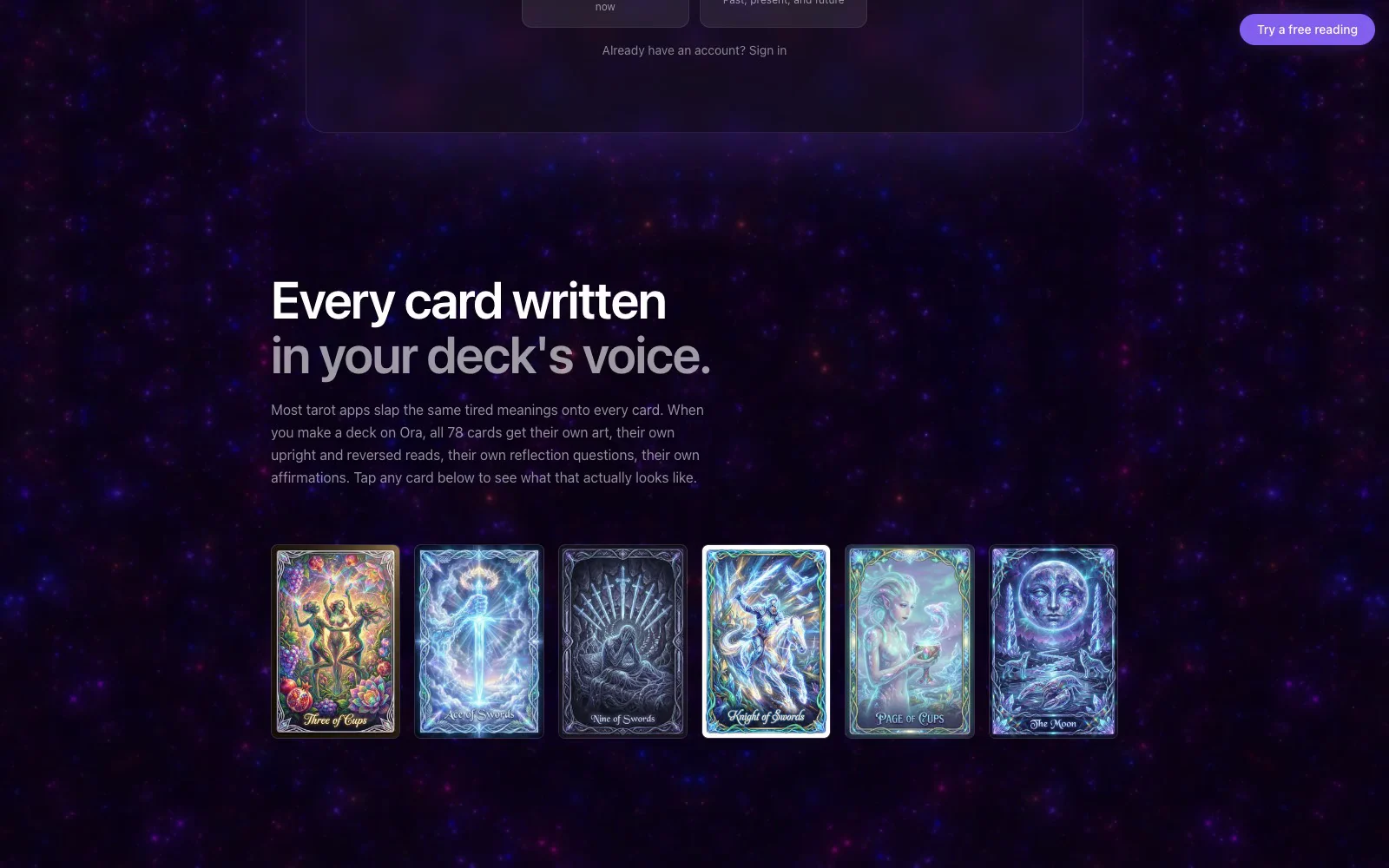
Ora draws natal and Human Design charts live from your birth data and pulls tarot cards in the conversation when a question calls for them. You can switch from typing to speaking and keep the same context. The web app and an Expo iOS app share one account and one subscription.
Every reading starts from calculation. A Swiss Ephemeris service on Fly.io computes planetary positions, and dedicated engines handle Human Design gates and channels, Pythagorean numerology, biorhythm cycles and relationship synastry. Supabase holds profiles, conversations and subscriptions, with background workflows on Inngest.
Interface
Mobile
Calculation
Data
Agents
Payments & monitoring
The oracle runs as an agent with a tool registry: it can pull cards, read a horoscope, plan a day or look at a relationship mid-conversation. A unified memory system learns preferences across more than thirty categories and retrieves past context by meaning, so a new reading can draw on what you asked weeks before.
Ora is live at ora.guide, with the iOS app prepared for TestFlight. Before traffic arrived we instrumented acquisition and retention as funnels, from the first anonymous message through onboarding to a day-one return, and wired error monitoring across web and mobile.
A cosmic sky moves behind every screen.
How it was made
A full-screen WebGL fragment shader plus a canvas star field.
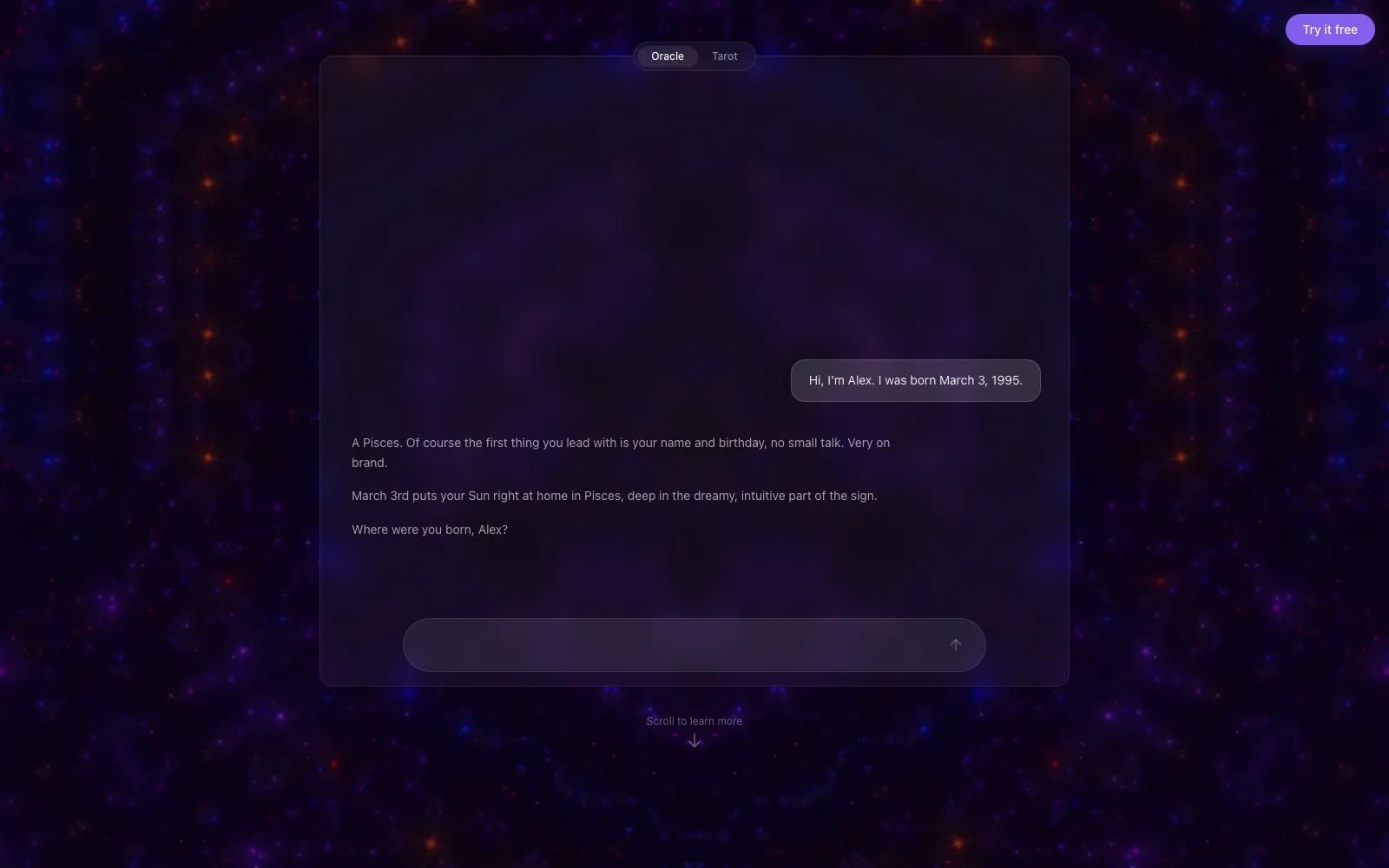
The first fold is a live conversation, not a pitch.
How it was made
Streaming AI chat in a frosted glass panel with oracle and tarot modes.
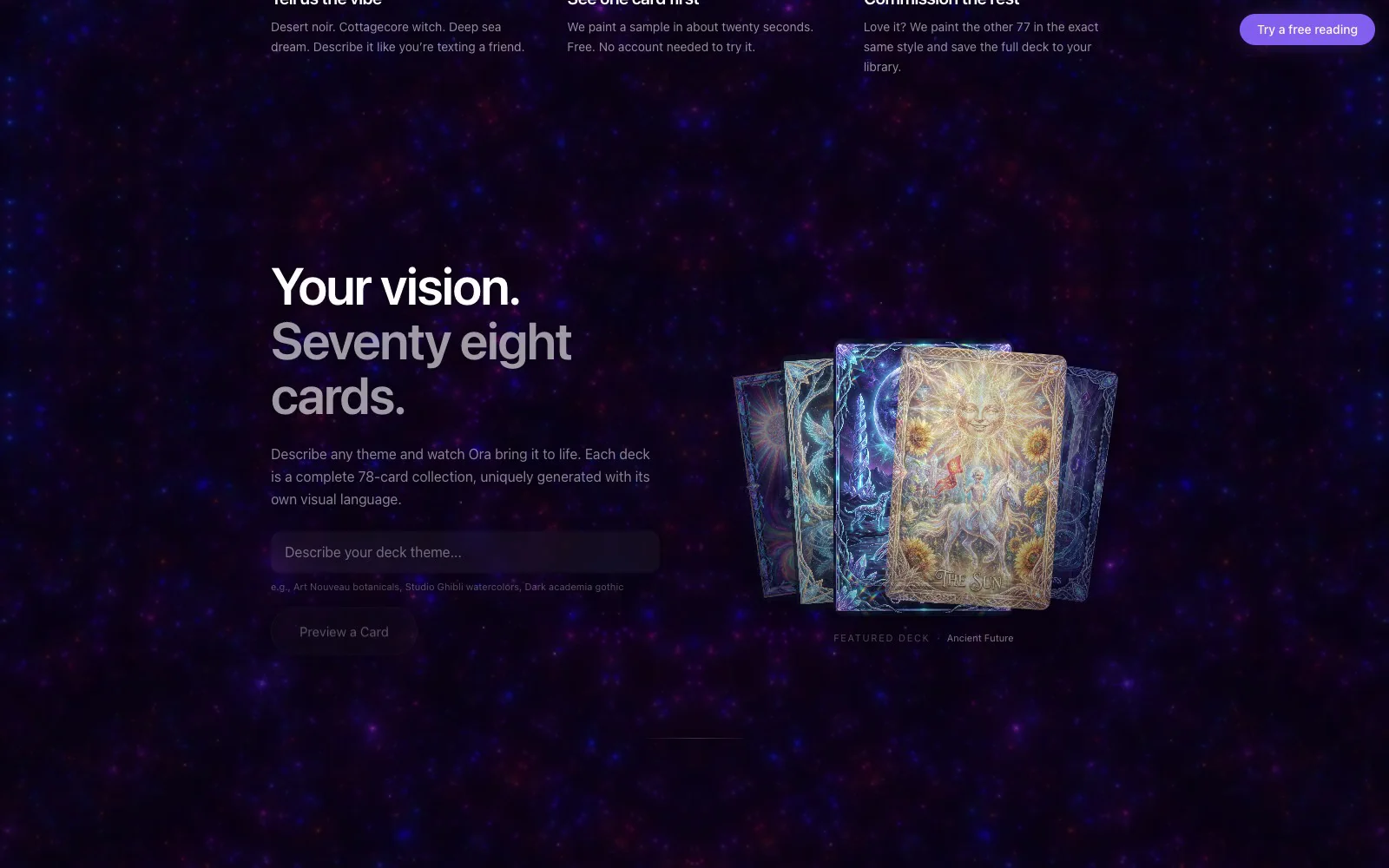
Natal and Human Design charts render from your birth data.
How it was made
Canvas-drawn chart engines.
Ask out loud and Ora answers in voice.
How it was made
Live voice over Gemini Live.
Next project
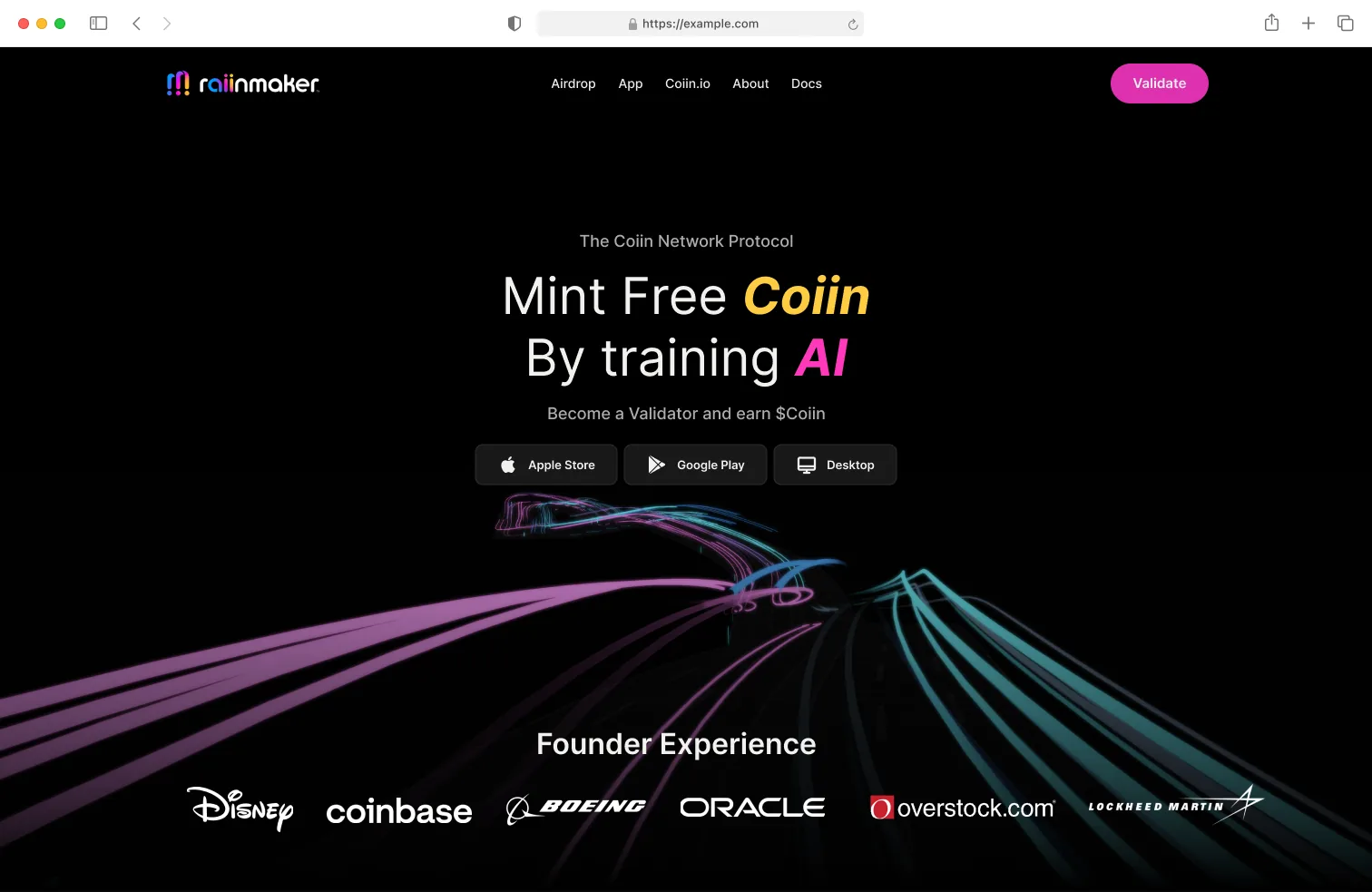
Raiinmaker
Raiinmaker pays people in Coiin for the work that makes AI better: creating content, training models and validating the network. Three audiences share one product. We gave them a site that explains the offer to a newcomer in one line and a validator experience that keeps people who are already staking coming back.
Want one like this?
Tell us about the business. You leave the first call with a direction and a written estimate.